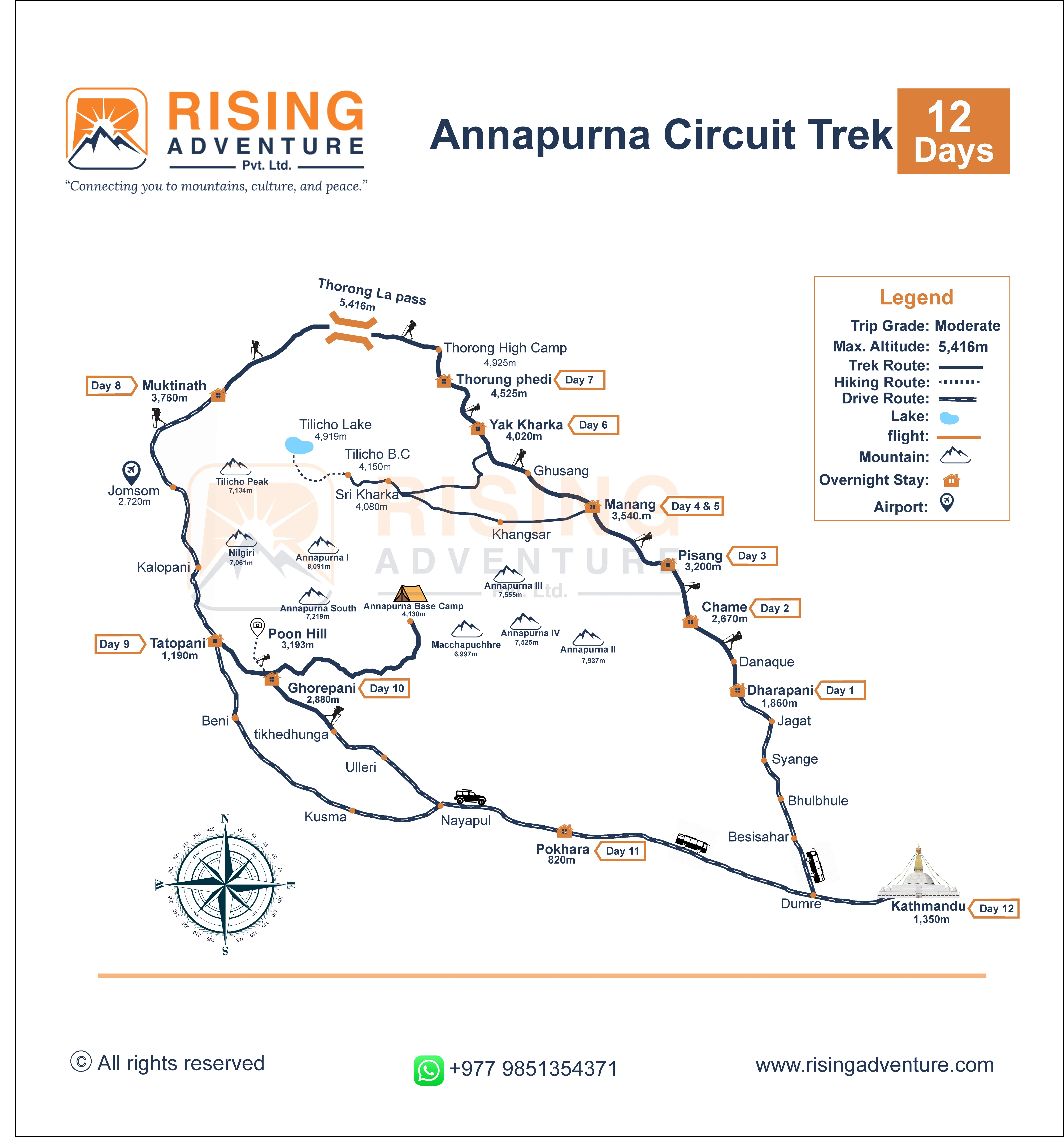
The meals available during the Annapurna Round Trek
Food on the Annapurna Round Trek is served mainly in teahouses and lodges along the trail, offering simple, filling, and energy-rich meals ideal for trekkers. The most common and recommended meal is Dal Bhat Tarkari, a traditional Nepali dish consisting of rice, lentils, vegetables, and pickles. You also get a decent amount of options for Western dishes. As altitude increases, food choices become more limited and prices rise due to transportation difficulties. It is important for you to stay hydrated and also try dishes with garlic, as they help for acclimatization to the higher altitude.
The breakfast during the Annapurna trek usually includes Tibetan bread or chapati, coffee, tea, eggs, porridge, and pancakes.
For lunch and dinner you can have Dal Bhat Tarkari (rice, lentils, and veggies), momo (dumplings), garlic soup, noodles, thukpa, potato items, pasta, and rice pudding.
The drinks include tea, coffee, hot water, hot chocolate, fruit juice, hot lemon with ginger/honey, and alcoholic beverages such as beer. The alcoholic beverages are not included in our package, so you need to purchase them at your own expense.
Note: It is not advised to drink alcoholic beverages, caffeine, or hot chocolate at high altitude, as it increases the chances of altitude sickness.
You can also purchase snacks such as biscuits, noodles, and chocolates from shops in the villages for your day’s journey.
Accommodations on the Annapurna Round Trekking
Accommodation along the Annapurna Circuit is provided mainly by teahouses and guest lodges, which are mostly twin-sharing rooms for trekkers. Most lodges have a communal dining hall with a stove, creating a warm and social atmosphere in the evenings. You will get rooms with attached bathrooms in places like Dharapani, Pisang, Muktinath, and Tatopani. The room will be basic yet comfortable at stops like Manang and Thorang Phedi.
Facilities such as hot showers, Wi-Fi, and charging points are available in most lodges, though these services usually come at an extra cost. During peak trekking seasons, teahouses can become crowded, so early arrival or booking in advance is strongly recommended.
Best time to do the Annapurna Circle trek
Autumn (late September to November) and spring (March to May) are the most appropriate times to do the Annapurna Circuit. These seasons are characterized by favorable weather and the best mountain scenery.
Autumn is one of the most popular trekking seasons because it has clear skies, dry trails, and excellent visibility. The other ideal time of the year is spring, which is characterized by a warm climate and blooming rhododendron forests. Thorong La Pass may still be covered with snow. Therefore, trekkers are advised to be cautious while crossing the pass (you can also use microspikes for safe walking in snow).
Winter trekking from December to February is possible but more challenging due to cold temperatures and snowfall at high passes like Thorong La, while the monsoon season from June to August/early September is generally not recommended because of heavy rainfall, landslides, and limited visibility.
Temperature during each season
|
Season
|
Temperature (measured in °C) |
|
Spring
|
- 10°C to 20°C during daytime at lower elevations
- 8°C to 0 °C during daytime at higher elevations
- about 0°C during nighttime at higher elevations
|
| Summer/Monsoon |
- Up to 25°C during daytime at lower elevations
- around 10°C during daytime at lower elevations
- Drop up to 0°C during nighttime at higher elevations
(Note: There will be heavy rainfall, especially during July and August.)
|
| Autumn |
- 15°C to 25°C during daytime at lower elevations
- Drop up to -5°C or lower during nighttime at higher elevations
|
| Winter |
- 5°C to 15°C during daytime at lower elevations
- Reach up to -10°C or lower during nighttime at higher elevations
|
Trek Difficulty of the Annapurna Circuit Trek
The Annapurna Circle Trek is considered a moderate to challenging trek, requiring good physical fitness and stamina. Trekkers typically walk 5 to 7 hours per day on varied terrain, including steep ascents, descents, and rocky paths. Crossing Thorong La Pass (5,416 m) is the most demanding part of the trek. The elevation and cold temperatures further add to the difficulty.
The trek will be difficult for the beginners. But with the help of experienced guides, pre-trek preparation, and good acclimatization, physically fit beginners can successfully complete the trek and enjoy it to the fullest extent.
Annapurna Trekking Travel Essentials and Permits
Visa
Any foreign nationals (except Indians) entering Nepal are required to have a valid visa that is either received upon arrival at Tribhuvan International Airport, Kathmandu, or as an e-visa. You must have a passport with at least 6 months of validity.
Currency and additional costs of the trek
In Nepal, the local currency is the Nepali rupee (NPR). In big cities such as Kathmandu and Pokhara, cards are accepted. However, you will need cash since the majority of teahouses and stores in the Annapurna Circuit accept only cash. Legal money exchange counters in Thamel, Kathmandu, allow you to readily exchange foreign currency for Nepali rupees. We suggest that you bring 200 to 400 USD to spend on additional personal expenses during the entire trek.
Travel Insurance
The Annapurna Round Trek requires travel insurance. Medical emergencies, evacuation, and trekking at high altitudes (above 5000 m) should be covered by your insurance in case of emergencies. Rising Adventure’s Annapurna Circuit trek package does not include travel insurance. Thus, we recommend that you purchase your travel insurance from a reliable company.
Travel Permit
You will need two main permits for trekking the Annapurna Circle Trek. They are:
- Annapurna Conservation Area Permit (ACAP)
- Trekkers’ Information Management System (TIMS) Card
All the permits are handled by Rising Adventure for your hassle-free Annapurna region trek.