Meals on the Dhaulagiri Circuit Trek
You will have plenty of food items to choose from during your stay in Pokhara and Kathmandu. There will be options of continental, Nepali, Indian, Chinese, and other dishes on the menu. The famous and common dish will be the traditional Dhal, Bhat, and Tarkari (rice, lentils, and veggies), which is delicious as well as nutritious. During your camping, our professional cook will provide you with hygienic and nourishing dishes throughout the trek. The meals will be served on a 3-course basis (breakfast, lunch, and dinner).
Accommodations along the Dhaulagiri Circuit Trek
During your stay in the lower regions of the Dhaulagiri trek, your stay will be in comfortable teahouses/lodges. As you reach higher elevations, the night stay will primarily be in a tented camp. Two people will stay in each tent, and for a single, you will need to pay an additional fee. Dining, kitchen, shower, and toilet tents will be available throughout the trek. You will also get chairs to sit and enjoy the open and beautiful view outside from the tent.
Best times to do the Dhaulagiri Trek
The spring (March to May) and autumn (late September to November) seasons are the most appropriate times for the Dhaulagiri Circuit trek. During spring, the weather is stable, the landscapes are decorated by vibrant colors of forests and wildflowers, and the mountain visibility is very clear. This season is perfect for trekkers who are nature lovers and photography enthusiasts.
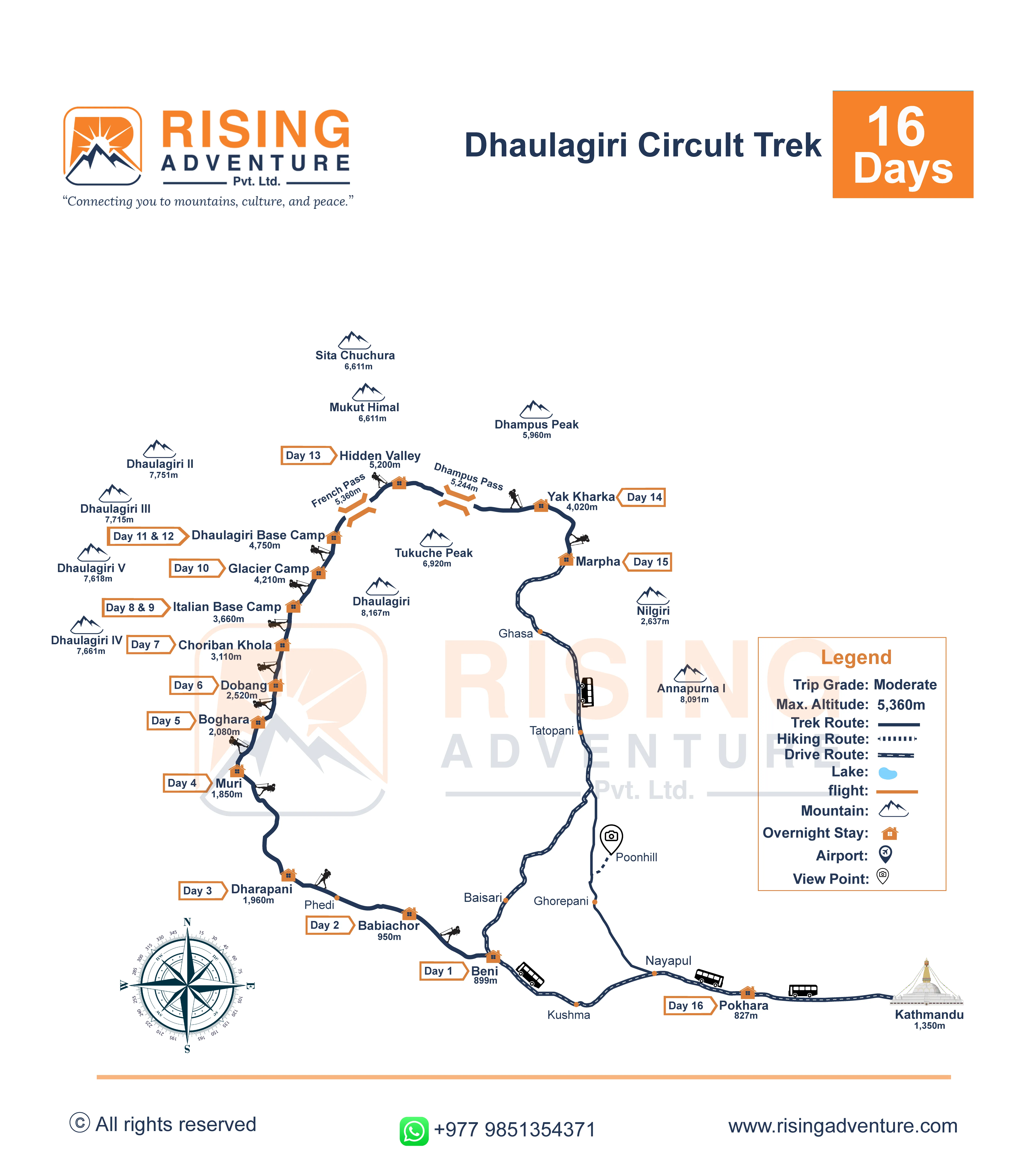
Similarly, the autumn season presents travelers with warmer temperatures, clear skies, and excellent visibility of the Himalayas. The trails and weather conditions are great for crossing the French and Dhampus passes. If you visit Nepal during this time, you can also experience the country's major festivals, Dashain and Tihar.
While the Dhaulagiri trek can be done throughout the year, the winter and monsoon seasons are not generally considered ideal times for the trek. Extreme cold and snowy trails make it difficult to trek in winter. Whereas the monsoon season is not considered safe due to frequent rain and floods.
Dhaulagiri Circuit Trek permits
The two permits required for the trek are the following:
i) Annapurna Conservation Area Project (ACAP)
ii) Dhaulagiri Restricted Area Permit
The Annapurna Conservation Area Project permit will cost 25 USD per person. This will help in achieving a balance between nature conservation and socio-economic improvement in the Annapurna Conservation Area (ACA).
A Dhaulagiri Restricted Area Permit is necessary for the trek, as you will be walking in the restricted area of the Dhaulagiri region. This also assists in the nature and culture preservation of the area. The permit will cost a fee of 20 USD per person per week.
The permits can be obtained in Kathmandu or Pokhara. Rising Adventure will issue and collect these permits on your behalf so that you can explore the restricted area of the Dhaulagiri region without facing any difficulties.
Dhaulagiri Trek Difficulty
The trek is considered to be a difficult one, which is suitable for trekkers who have great fitness and mental resilience. During the trek, you will reach an elevation above 5000 m, which includes crossing the high passes. Therefore, there is a high risk of altitude sickness without proper acclimatization to the high altitude.
You will also be out of contact for several days due to an unstable or no mobile network connection. The trek duration lasts for about 3 weeks and requires walking 5 to 6 hours on a daily basis.
It is very beneficial to have previous trekking experience to complete this trek. However, beginners can do this trek if they have enough preparation for a few months before the trek.