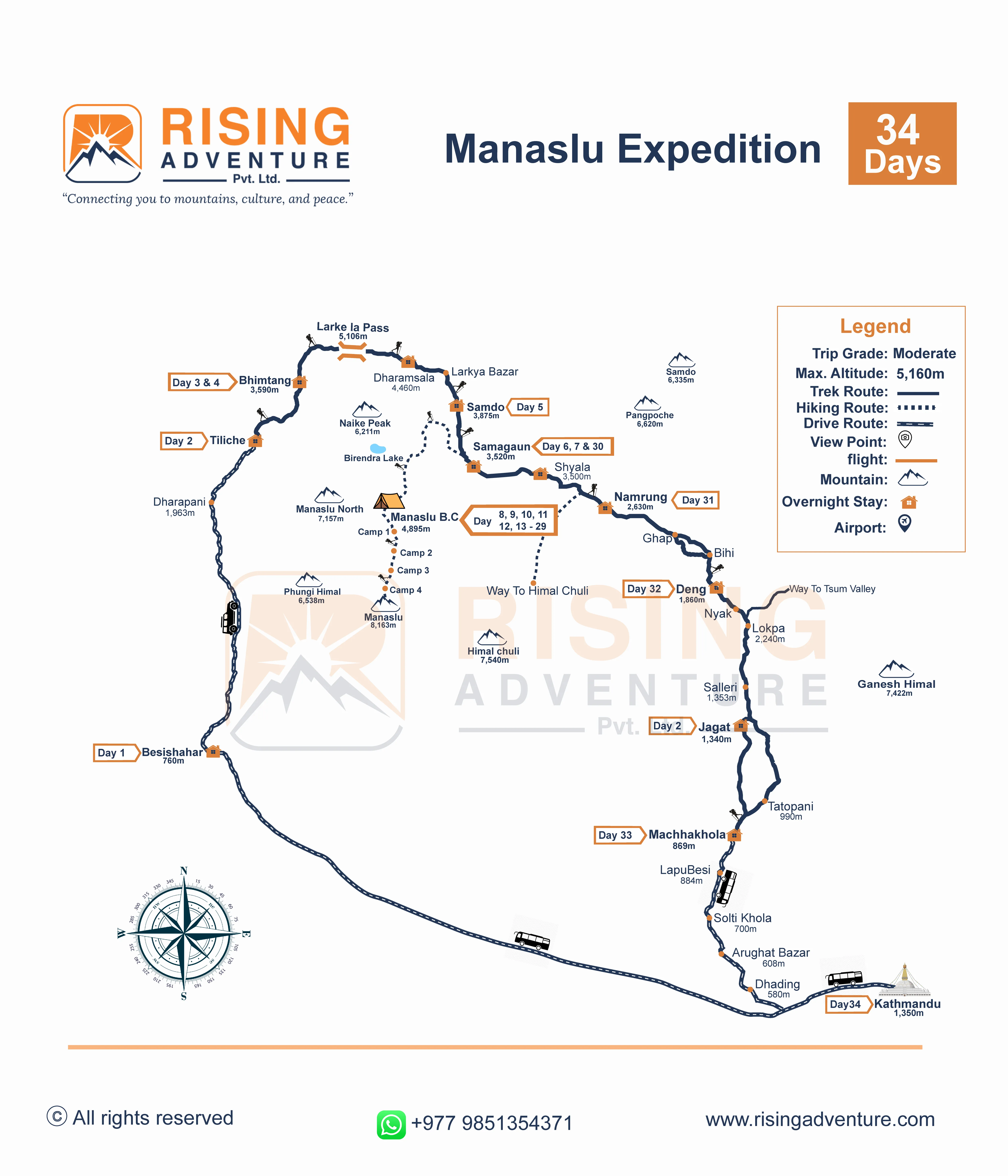
Manaslu Expedition Preparation as per its difficulties
Not only Manaslu climbing, but the trekking to Manaslu Circuit is also demanding as the trekking trail includes high passes above 5000 m elevation, longer walking, rough route, high hills, and other difficulties. On the other hand, the Mount Manaslu climbing adventure trails consist of sloping snow, icefalls, loose rocky path, crevasses, steeper icy way, glaciers, and others.
As per the Manaslu Expedition challenging, we have to be prepared accordingly.
Physical Strength
Physical strength is the most required endurance to accomplish the Mount Manaslu Expedition. It is well known that we need to walk for almost 6-7 hours per day to complete the Manaslu trek, and a full night walk is needed to stand on top of the summit of Mount Manaslu. So, the strenuous trekking and cardiovascular workouts for almost 6 months. It helps to build up physical strength and stamina.
Altitude Sickness
Altitude sickness is the most concerning issue while joining the Expedition to Mount Manaslu. It is well-known that there is the possibility of altitude sickness above 2500 meters, and the Mount Manaslu summit stands at 8,183 meters above sea level. It means you will be at more than 8000 meters. In the same way, the Manaslu trek includes the night stops with an elevation of above 3000 meters. Larke La Pass at 5,215 meters is the most significant high pass of this trekking. It means there is a high chance of being a victim of high-altitude sickness. As a result, you will be unable to reach the summit, get impaired, or may die.
Therefore, every climber needs to be well prepared for acclimatization. Making your body hydrated, a healthy and nutritious diet, slow walking, avoiding alcoholic drinks, smoking, and etc help you to achieve your goal and reach the top of Mount Manaslu.
In addition, the climbing experience is the most supportive activity to reduce the chances of high- altitude sickness while climbing to Manaslu Mountain.
Beyond our control
Anything can be happened which cannot be controlled during the adventurous journey to the summit of Manaslu. The bad weather conditions are one of the most challenging contingencies while climbing to Manaslu. It ruins each and every plan if the weather won’t be on our favor. The avalanches, thunderstorms, snowstorms, rain, and so on are the most concerning issues while making a plan for an adventure expedition.
Hence, the Rising Adventure team always stays alert and gets in touch with the team for the weather updates. However, sometimes even the weather forecast doesn’t work properly. So, we give the authority to our senior climbing guide to change the plan instantly if there are sudden changes. And he will do his best accordingly, as per his climbing experiences. Therefore, you need to reserve some extra days.
Besides, you need to be prepared with the tough outfits in case of weather changes.
Travel Insurance
Travel Insurance is mandatory for the Manaslu climbing as the expedition is very challenging. The climbers encounter threats like avalanches, icefalls, altitude sickness, heatstroke, hypothermia, and so on. Besides, Manaslu is located in a remote and hidden region of Nepal, where the lack of immediate medical facilities and rescue services.
In addition, the travel insurance policies are different on the basis of the payment. Therefore, it is advisable to buy travel insurance that covers the 8000-meter elevation, quality medical treatment, and emergency helicopter evacuation. As a result, the climbers can enjoy their trip freely, safely, and also cover the financial issues.
Off-the-beaten trails and Remote Valleys
The off-beaten trail and the remote valleys add extra difficulties to the Manaslu adventure expedition. There is limited access to medical treatment, communication, transportation, and emergency services. However, Rising Adventure has its own wi-fi team. We will provide full online access even at the Manaslu Base Camp.
Though a teahouse with basic facilities is available during the Manaslu trek days, the mesmerizing mountain views, distinctive culture, flora, and fauna energize you and help you to enjoy the trip full of fun and energy. A twin-sharing room with a blanket and a pillow, communal toilets and bathrooms, and simple dining rooms are accessible.
Previous Climbing Experience
For participating in the Manaslu Climbing activity, every climber must have the climbing experience above 5000 meters in elevation peaks, such as Island Peak climbing, or others. It helps you to acclimatize your body properly and learn some climbing techniques as well. The basic mountaineering skills needed for the Manaslu Expedition are crevasse rescue, use of fixed ropes, ice climbing, rock climbing, snow navigation, ice navigation, walking on a glacier, and so on.
Why Choose Us?
We are experts in offering the comfort of well-arranged and organized trips by handling everything required for your mountain adventure. We are a professional team of experienced tour leaders and guides, providing services in the related field for several years. Our guides are the government-licensed holders who will ensure your journey is easy and safe. They are friendly, helpful, and supportive, and make the adventure enriching and memorable.
We provide guides who are fluent in English and can communicate with you properly. They are also knowledgeable about the local language and facilitate sound interaction with the native people in the destination regions. We will obtain all the required trekking and climbing permits for the Manaslu expedition. We also craft special customized itineraries upon your request. Our fine-tuned itineraries ensure to best align with your needs, available time frame, fitness, and experience level, and desired highlights along the way.
Meals along the Manaslu Expedition
The meals provided during the expedition will be hygienic, freshly prepared, and nutritious, as required to have energy for the strenuous climb. The most common dish will be Daal Bhaat Tarkari (Rice, Lentils, and Veggies), which is tasty as well as nourishing. Other common dishes include noodles (thukpa), fried rice, eggs, porridge, pasta, vegetable soup, etc. During the trek in the lower elevation, there will be plenty of food options on the menu. As we go higher, the food options get limited.
Energy bars and snacks will also be provided during the trek and climbing. We highly recommend drinking plenty of water throughout the day and staying hydrated. Instead of having meals all at once, it is best to have frequent meals in small amounts.
Accommodations in the Manaslu Expedition
You will have two types of accommodations during the expedition. The first half will be trekking up to the Manaslu Base Camp (4800 m). During the trek, there will be plenty of locally run teahouses along the trail for the night stay. The rooms will be simple yet comfortable with basic bedding. Toilets are usually shared and are available in squat styles. There will be a dining area with a well-lit stove at the center for having warm and tasty meals in the evening.
Whereas from the base camp, the stay will be in tented camps. At the MBC, there will be plenty of tents used for sleeping, eating, and resting. Around the 6000 m mark, tented camps will be set at the high camp. The tents will be simple but will be safe from strong winds and provide you with enough facilities for acclimatization as well as the summit push.
Best time for the Manaslu Expedition
Spring (March to May) and Autumn (September to November) seasons are the most appropriate times for the Manaslu expedition. These seasons are characterized by stable weather and mild temperatures, which increases the chances of a successful summit. There are also fewer chances of heavy snowfall during these seasons.
Permits required for the Expedition
The necessary permits required for the expedition are:
- Manaslu Restricted Area Permit
- Manaslu Conservation Area Permit
- Annapurna Conservation Area Permit (ACAP)
- Manaslu Climbing Permit
Experience required for Manaslu Expedition
You need to have several skills and experience to reach the top of Mount Manaslu and return safely. Firstly, you need to know how to properly use crampons on snowy surfaces and steep slopes. Rappelling is another crucial skill for mountaineering. You must have some experience and knowledge about rappelling with a backpack. Along with the technical skills, one should also have some experience of camping in high altitudes with extreme weather conditions.
Having good endurance and strength are really important for climbing at high altitudes. You also need to properly acclimatize to the high altitude. Finally, you should have sufficient climbing training and preparation to increase the chances of making a successful summit of the 8th highest mountain in the world, Mount Manaslu.
Altitude Sickness and its Prevention
Altitude Sickness is one of the major concerns during the mountain expedition. As the summit is above 8000 m, there will be risk of altitude sickness without proper acclimatization. During initial stages, you will see symptoms such as headaches, nausea, vomiting, loss of appetite, and so on. If the condition gets worse, you might even get HAPE or HACE which will impact your brain and lungs. Therefore, you must be properly acclimatized to the high altitude. Always walking at a steady pace, staying hydrated throughout the day, and not gaining significant altitude at once are essential to prevent altitude sickness.
If you get the initial symptoms, you need to stop climbing further, take rest, and descend to a lower altitude. If the symptoms get severe, we are always prepared for your safe evacuation via helicopter or land vehicle to the nearest hospital. For your safety, we highly advise you to check the condition of your body every once in a while and inform your guide if any symptoms arise.
Safety Measures and evacuation guidelines in case of emergency
There will be experienced guides who are well trained in giving first aid for every group in the Manaslu Expedition. The guides will carry first aid kits with them and will take immediate action in case of health-related concerns. It is highly recommended that you carry medical equipment for yourself during the climb. If the conditions get critical, we have an emergency evacuation plan ready. You will be transported to a nearby hospital with either a helicopter rescue or a land vehicle, depending upon the case's severity.