Best time to travel
The perfect seasons for trekking in Mardi Himal are spring (March to May) and autumn (mid-September to November). During spring, the trail is combined with the rhododendron blooming, and it turns the forests into reds, pinks, and whites. The temperatures in the day are generally light and the skies are normally stable with great views of mountains such as Machhapuchhre and the Annapurna range. Autumn is perhaps the most popular season for trekking in Nepal and with good reason. The skies during the post-monsoon are crystal clear, the air is crisp, and the mountain scenery is spectacular. During the day, there are comfortable temperatures for hiking, but the nights in higher camps can be cold.
The Mardi Himal Trek is faced with harder weather during the off-season, when the trail becomes slippery due to the rain or snowfall, making it difficult to traverse. The clouds may obstruct views of the mountain, and some higher-altitude teahouses may be closed during these times.
Accommodations
During our time in Kathmandu and Pokhara, we will be staying in a 3-star comfortable hotel. The Mardi Himal Trek has lodges and teahouses, which offer basic yet comfortable accommodations. In the lower altitudes, such as Pittam Deurali and Forest Camp, the available accommodation is simple rooms with common bathrooms and clean bedding. You can also get access to WiFi, electricity, and hot baths in various lodges, but you will need to pay additional charges for them. The higher you go to Low Camp, High Camp, and Base Camp, the more basic the teahouses become, with shared rooms for people of 3-4 (even 6-7 during peak seasons) and very little hot water. Even though they are simple, these lodges give a warm sleeping space and a recharge after a long day of trekking.
Food
Food on the trail is typically Nepali, Indian, and Tibetan, with options like dal bhat (rice and lentils), noodles, soups, pickles, pudding, and momo dumplings. Breakfast usually consists of porridge, eggs, or toast along with tea or coffee. Even though the higher camps may have a lesser menu and slightly higher prices because of transportation expenses, the hot meals are always available, and vegetarian dishes are common there. We recommend trekkers carry snacks and energy bars with them, as they will be taking long walks from the teahouses to higher elevations.
Water
Most teahouses serve safe drinking water (either free or at a minimal fee). We suggest that trekkers should carry a reusable water bottle and water purification pills because tap and natural water are not always safe. Hydration is an important factor, particularly in higher altitudes where there is dry air, and trekking becomes physically challenging.
Difficulty level of Mardi Himal Trekking
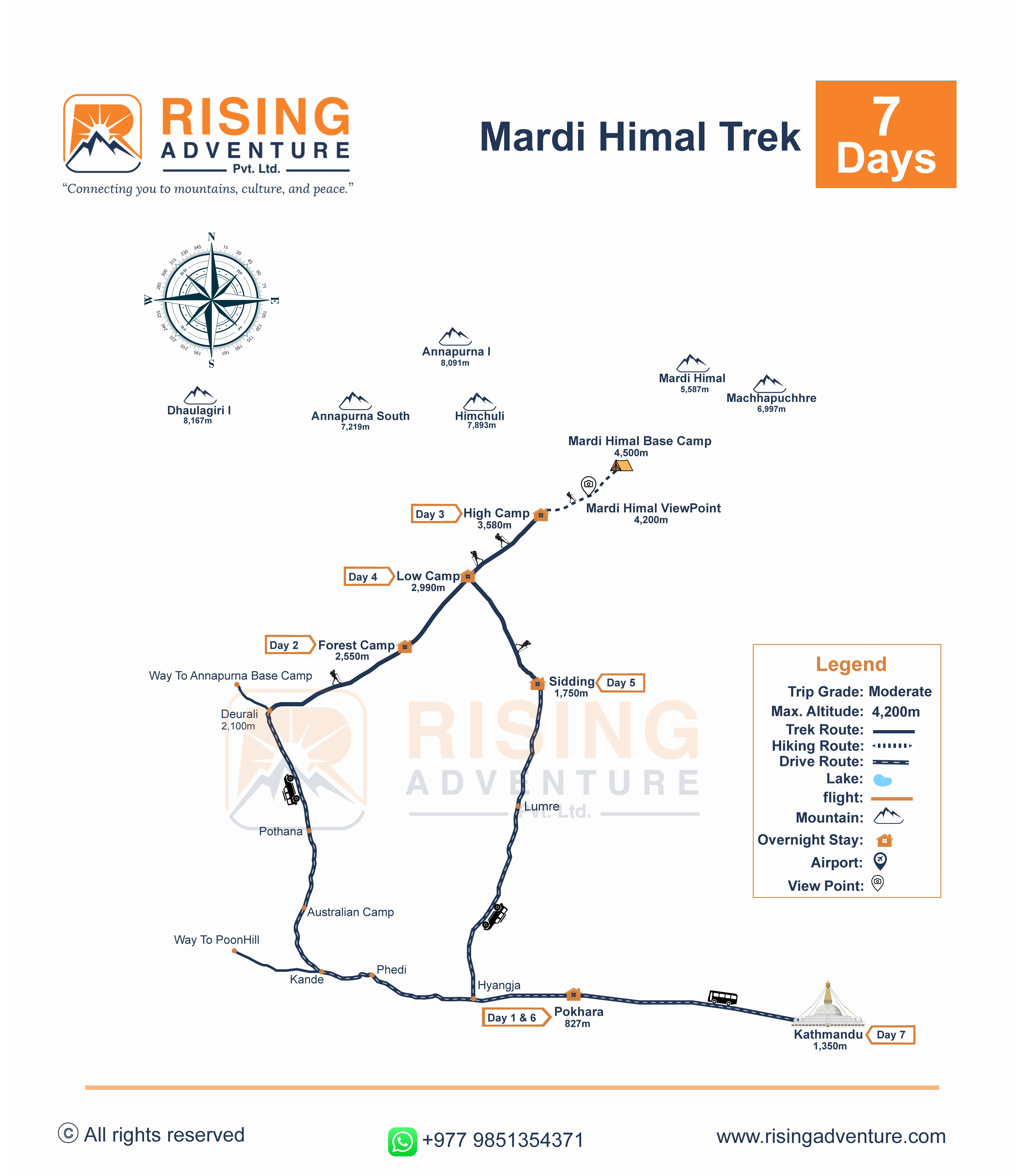
The Mardi Himal Trek is rated as a moderate one that can be taken up by both first-time trekkers and experienced trekkers. The trail usually has steady ascents and a few steep parts, including Sidding. Although no previous trekking experience is necessary, one should have basic fitness and endurance for the trek. The trek presents an interesting blend of woodland paths, ridges, and breathtaking mountain scenery.