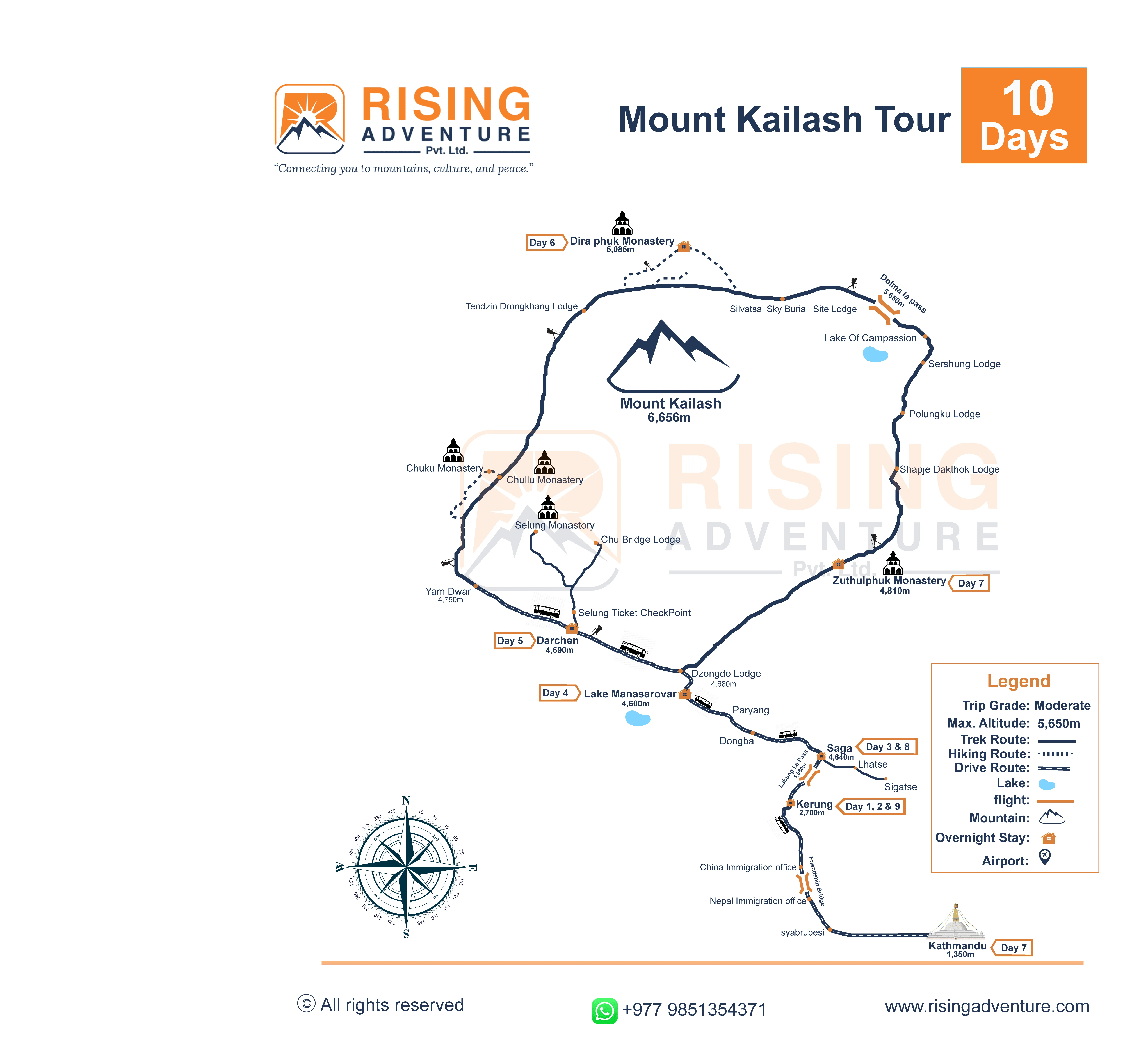
Accommodations during the Kailash Mansarovar Yatra
Accommodation during the Mount Kailash Mansarovar tour varies by location. In Kathmandu, you will be staying in our comfortable 3-star hotel with modern facilities. In Tibetan cities like Kerung and Saga, the accommodations will be in comfortable hotels. You can get access to Wi-Fi, hot showers, and attached bathrooms in these hotels. The heaters are also available along with warm beds for your comfortable stay.
During the Mount Kailash Parikrama along Lake Mansarovar, accommodation is basic due to the remote location. Rooms may be shared, heating facilities are limited, and bathrooms are shared mostly in squat types. You will also get access to hot showers in buckets. Despite being simple, accommodations during the Mount Kailash Kora will be clean, safe, and convenient for pilgrims.
Foods Available in the Mount Kailash Tour
Food during the trip to Mount Kailash will be nourishing and suitable for high-altitude travel. In Kathmandu and Tibet, pilgrims are served with meals at good hotels and local restaurants.
Meals will be vegetarian and freshly prepared to support energy and digestion. Food options will be Indian, Nepali, and Tibetan dishes. During the Kailash Kora, food options become basic but warm and filling, usually provided at guesthouses.
The breakfast options include Tibetan bread or chapati, toast with jam, honey, and butter, porridge, fruit salad, cornflakes, Aalo Paratha, tea, and coffee.
The options for lunch are lentil and rice (daal bhat), roti or paratha, vegetable curry, pickles, veg biryani, fresh fruits, potato dishes (aloo sadheko, aalu matar, and potato fries), juice, papad, soup, and salad.
For dinner, you get the options of rice, daal, vegetable curry, soup, roti, pickle, paneer, tofu, fried noodles, fried rice, aloo sadheko, beans, fruits, papad, and salad.
The drinks include mineral water or boiled water, tea, coffee, freshly prepared juice, and hot lemon with ginger and honey.
Summer Season (May to June) - The best season for a spiritual journey
People often consider the summer season as the best time to do the Mt. Kailash trip. The weather in this season is the most convenient, with clear blue skies and the temperature ranging from 5 to 20℃ in the daytime.
You may also get the chance to witness the celebration of the Saga Dawa festival, which lasts for a month. The main celebration is done on the fifteenth day of the fourth month in the Tibetan calendar (31st May). Many pilgrims gather around the Kailash Parvat in this season, creating a cheerful and profoundly spiritual environment.
Autumn Season (September to October) - Perfect for peaceful Mount Kailash Parikrama
The autumn season offers a quieter trail to Mount Kailash compared to the summer season. The weather is suitable, with clear blue skies and a temperature of around 15℃. You will also get mesmerizing views of the holy Kailash Parvat with an accessible route, making it a suitable season for trekking.
How difficult is the Kailash Mansarovar Yatra
The Kailash Mansarovar Yatra is a challenging trip that involves physical and mental training. This is primarily because of its extremely high altitude and isolation. The Kailash Parikrama involves the trek at a height of above 4,500 meters. Pilgrims must also traverse the Dolma La Pass at 5,643 meters. At these altitudes, the thin air may result in fatigue, dyspnea, and other effects of altitude sickness, even for healthy people.
The three-day parikrama of Mount Kailash involves walking on uneven ground for several hours a day. This can be physically straining, especially when it is cold and windy. However, the yatra is achievable under proper training, gradual acclimatization, and firm mental resolve. Each year, many pilgrims manage to make a successful journey and share about this experience as very transformative and spiritually rewarding.
Do's
- Prepare yourself both physically and mentally for the trip.
- Acclimatize properly at the high altitude by moving at a slow, steady pace.
- Bring medicine and a first aid kit.
- Always pay attention to what your guide is saying.
- Eat light, simple, and easy-to-digest food.
- Respect and adhere to local culture, religious practices, and sacred places.
Don’ts
- Do not ignore symptoms of altitude sickness.
- Do not rush or exhaust yourself at high altitude.
- Do not consume alcohol or smoke when you are on the yatra.
- Do not bring unnecessary or heavy baggage.
- Do not go out of the group or choose the unapproved paths.
- Do not pollute or harm nature.