Accommodations and Meals
The stay during the Rolwaling Valley trek will be in simple, locally run teahouses and lodges. However, the local sherpas and Tamangs who run these teahouses are very welcoming and friendly. In peak seasons, you might need to share the room with other trekkers of the same gender.
Similarly, the meals along the trail will be hygienic and freshly picked from the farms. Our Rolwaling Valley trek package contains 3-course meals (breakfast, lunch, and dinner), and they will be served in the teahouses. One drink per day will also be available along with your meal. Daal Bhat Tarkari (rice, lentils, and veggies) will be the most common dish for the entire trek and is very nutritious and tasty. Other common food items include soups, potato dishes, and noodles.
Best time to do the short Rolwaling Valley Trek
The most appropriate times for the trek would be spring (March to May) and autumn (late September to November). These seasons are characterized by pleasant temperatures, stable weather, clear blue skies, and great visibility of the Himalayan scenery. In spring, the rhododendron and wildflowers decorated the forested trails. Similarly, trekkers can experience the country’s major festivals (Dashain and Tihar), which will fall in the autumn season around late September and October.
The trek can be done throughout the year, but traveling during the monsoon and winter seasons comes with its own set of challenges and drawbacks. During the monsoon, the mountain views might get obstructed by the clouds. Also, there is a high chance of rainfall, which causes the trail to become muddy and slippery. Similarly, the temperatures can get very cold at night in higher elevations during the winter season.
Essential Rolwaling Valley Trek Permits
The necessary permits required for the trek are the Gaurishankar Conservation Area Permit and TIMS (Trekkers' Information Management System). The Gaurishankar Conservation Area Permit will cost around NPR 3000 per person. As Rolwaling Valley lies within the conservation area, the trekkers need to acquire this permit to explore the place without any trouble. The permit fees also help in the conservation of the wildlife, delicate ecosystems, and local culture of the region.
Rolwaling Valley Trek Extensions
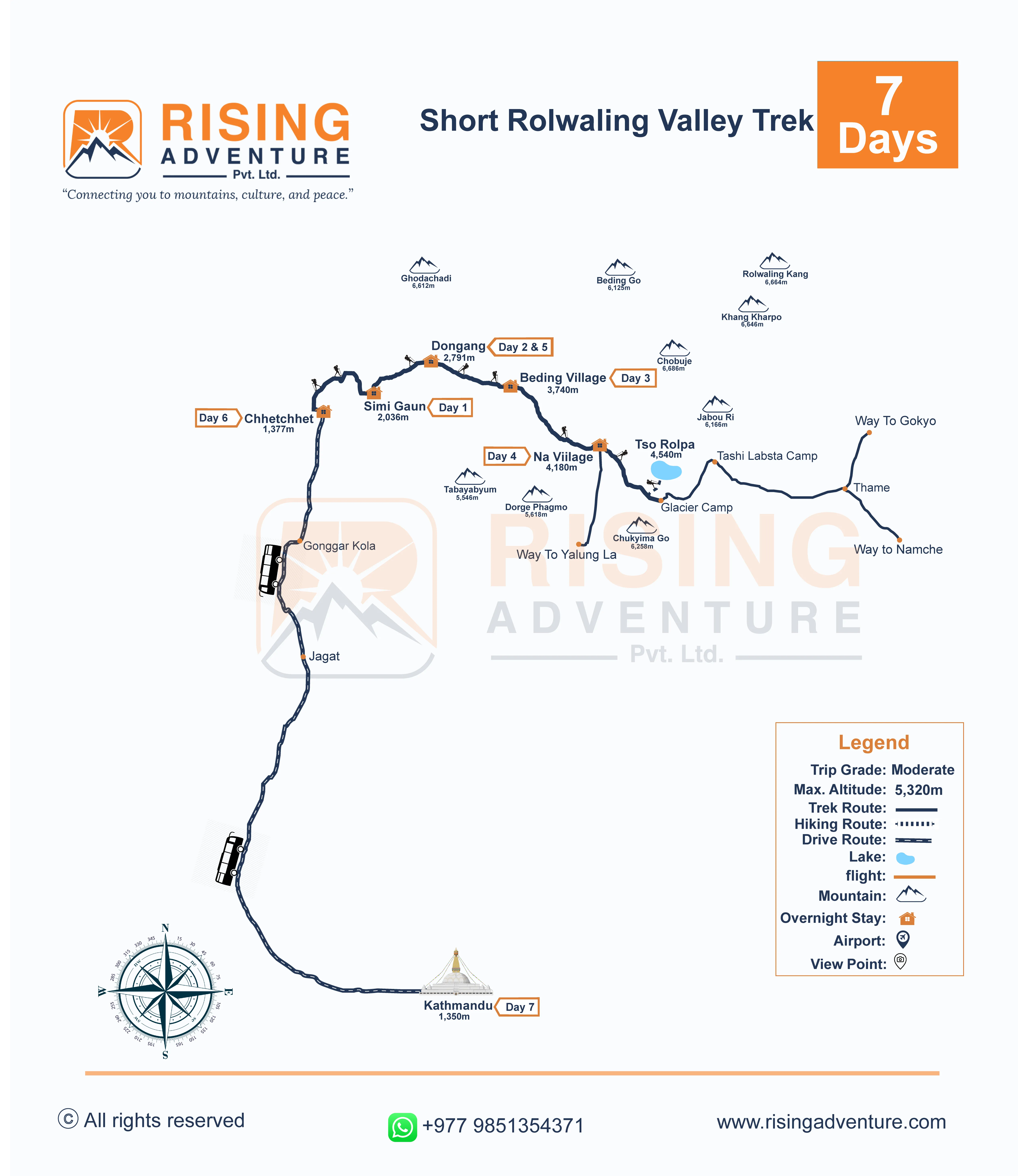
Trekkers have the option to extend their journey to Rolwaling Valley with other famous treks in the Everest region/Khumbu region. From the Rolwaling Valley, it is possible to enter the Khumbu region via Tashi Lapcha Pass (5,755 m). The trekkers can head to Tashi Lapcha Pass from Tso Rolpa Glacier Lake, which will take them to Thame Valley. From Thame, it is possible to get to Namche Bazaar, the entrance to Everest and other major trekking spots in the Khumbu region.
Plenty of iconic trekking options can be taken from Namche Bazaar, including the classic Everest Base Camp Trek, Gokyo Lakes Trek, and Everest Three Passes Trek. However, the trek extension can be very challenging. So, it is highly advised to consider the trek extension if you have great physical fitness, stamina, and mental resilience to complete it.