

Thorong La Pass is a high altitude pass, at an altitude of 5416 m (17769 ft) above sea level, which is the highest point on the Annapurna Circuit in Nepal. It is one of the most memorable sections of the Annapurna Circuit trek and offers a great opportunity to experience the views of the mesmerizing snow-capped peaks and rugged mountain terrain as well as the charming alpine valleys that connect the Manang region to the Mustang.
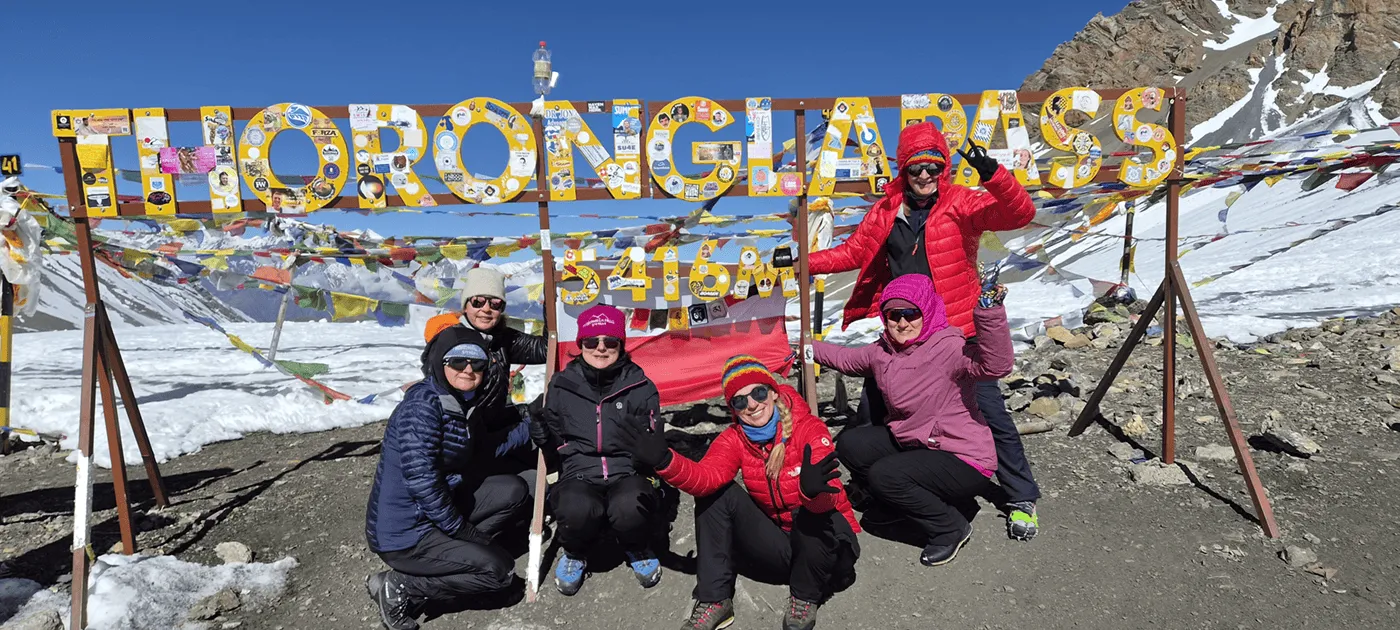
Ultimate Guide to the Annapurna Circuit Thorong La Pass
Crossing the Thorong La Pass requires proper preparation due to its high elevation, weather conditions, long walking hours, and steep and rocky trail. This guide will tell you all you need to know about the Annapurna Circuit Thorong La Pass, including what to expect, how difficult it is to cross the pass, and the best time to visit.
Why is Thorong La Pass famous?
Thorong La Pass is famous among trekkers for the following reasons:
- Remarkable achievement: Trekking to 5416 m is a remarkable achievement, particularly for trekkers making their first trek at altitudes above 5000 m.
- Panoramic Mountain Views: As you cross the pass, you get stunning views of the surrounding snow-covered mountains like Dhaulagiri, Tilicho Peak, Nilgiri and the Annapurna Himalayan range.
- Diverse landscape: The Annapurna circuit trek through Thorong La Pass takes you through the Marsyangdi Valley, the alpine part of Manang, and then to the drier part of Mustang.
- Cultural experiences: You will see traditional villages, monasteries and pilgrimage sites such as Muktinath Temple during the journey to Thorong La Pass on the Annapurna Circuit.
- A classic trekking challenge: The Thorong La Pass crossing is a long day journey that tests endurance, fitness, and mental resilience.
Annapurna Circuit Trek Itinerary Through Thorong La Pass
The Annapurna Circuit is a gradual trek through mountain villages, then to Thorong La Pass and descending to Mustang. The route outlined below is a typical trekking itinerary, including time for acclimatization prior to crossing the high-altitude pass.
- Day 1: Arrival in Kathmandu
- Day 2: Drive from Kathmandu to Dharapani via Besisahar
- Day 3: Trek from Dharapani to Chame
- Day 4: Trek from Chame to Upper Pisang
- Day 5: Trek from Upper Pisang to Manang
- Day 6: Acclimatization day at Manang Village
- Day 7: Trek from Manang to Yak Kharka
- Day 8: Trek from Yak Kharka to Thorong Phedi
- Day 9: Trek from Thorong Phedi to Muktinath via Thorong La Pass
- Day 10: Drive from Muktinath to Tato Pani via Jomsom
- Day 11: Trek from Tato Pani to Ghorepani
- Day 12: Hike to Poon Hill and drive to Pokhara
- Day 13: Scenic drive from Pokhara to Kathmandu
- Day 14: Final Departure
Thorong La Pass Difficulty
The Thorong La Pass crossing is difficult, primarily due to the high altitude, summit day, low temperature, and the possibility of shifting weather conditions. Usually the pass crossing does not need advanced mountaineering skills in favorable trekking conditions, but it should not be considered a regular trekking path.
The most significant factors that influence the difficulty are:
- Altitude: Thin air at high altitude makes physical activity more difficult and increases the risk of acute mountain sickness.
- Extreme Weather: Snow, strong winds, and low visibility can cause a hazardous or impassable crossing situation.
- Physical stamina: The climb up and down will be long and will demand a considerable amount of physical stamina and energy management.
- Condition of the trail: Snow, ice, loose rocks, and rough ground can affect the speed of travel.
- Altitude sickness: Ascending too quickly to the Thorong La Pass summit increases the risk of altitude sickness.
In the event that weather conditions worsen or if symptoms of altitude sickness appear, it is better to delay the crossing or to return back to the previous route.
Best Time to Cross Thorong La Pass
Deciding which season to make the crossing is very important for a safer and more enjoyable journey. The best seasons to trek are typically in the spring and the fall when the weather is more favorable for trekking at high elevations. Seasonal averages are not always a reliable substitute for current forecasts and local advice because weather conditions in the mountains can change rapidly.
Spring (March to May)
Spring brings warmer weather and longer daylight hours, as well as incredible scenery of the mountains. April and May are generally attractive months for trekking, whereas March can still bring significant snow and freezing temperatures near the pass. Late-season snowfall and sudden weather changes remain possible, so check the current conditions before leaving Manang.
Autumn (September to November)
Autumn is one of the most popular seasons for the Annapurna Circuit because the monsoon often leaves clearer skies and excellent mountain visibility. October is a favorable time period for trekking, while late November gets colder as the winter approaches. During this season, the crossing may still be affected by snow and strong winds at higher altitudes.
Winter (December to February)
The winter season is characterized by cold weather, snow, and increased probability of impassable crossings. Limited accommodation and services are provided in the higher regions of the Annapurna Circuit. Crossing during this time should be done with caution and must not be undertaken if heavy snow or hazardous weather is expected.
Monsoon (June to August)
During the monsoon season, much of the lower Annapurna region is affected by the rain, which makes trails slippery and muddy and the transportation system more susceptible to landslides. There is a greater need for flexibility and local monitoring around this season.
The pass can be unsafe even in the best of trekking seasons due to the recent snowfall or strong winds. That’s why be sure to ask your guide, trekking company, or local authorities for the latest status of the Annapurna Circuit trail before attempting the Thorong La Pass crossing.
How to Prepare for Thorong La Pass
You should be preparing for your trek several weeks beforehand. Just general fitness is not sufficient for the challenges of high altitude combined with long walking days and cold weather. Developing endurance, getting used to walking uphill, and staying ready for the unexpected circumstances of trekking in a remote mountain location will help make the pass crossing easier.
Physical Fitness and Training
The Annapurna Circuit trek doesn't require any elite athlete fitness, but it requires you to have reasonable fitness. Aerobic exercise, walking regularly, uphill hikes, climbing stairs, and cycling are all good pre-trek preparation exercises.
Hike on uneven surfaces with a backpack, if possible. Gradually increase the distance and elevation of training walks, rather than taking one long strenuous hike right before you go on your trek to Annapurna Circuit. Similarly, exercises such as step-ups, squats, and lunges can be effective for developing leg strength for traversing uphill and downhill terrain.
Acclimatization and Altitude Management
Acclimatization is one of the most important factors in preparing for Thorong La Pass. As altitude increases, there will be less oxygen available, and physical activity will become much harder. You will need to gradually ascend, stay hydrated, rest, and acclimatize so that your body can adapt to the high altitude.
It is common for people to spend a second night in Manang before continuing on to Yak Khakra and Thorong Phedi. If you feel well, moderate walking to a higher altitude and then return to a lower altitude to sleep can be done during an acclimatization day.
Headache, nausea, dizziness, unusual tiredness, and loss of appetite could be early signs of acute mountain sickness. If symptoms get worse, they will need to get emergency medical care and descend to a lower region.
Mental Preparation
The crossing can feel demanding even for physically fit trekkers. You need to start your trek in darkness, encounter freezing temperatures, and continue moving slowly for hours before reaching the summit. You need to be mentally resilient and have a positive mindset to making it through the high mountain pass.
Packing for Thorong La Pass
When you have the proper gear, you will be ready to face the cold, wind, snow and physical demands of a long trek. Conditions around the pass can be very cold and standard hiking gear may not be enough to keep you warm, especially in the morning.
Insulation of the body and feet is essential for keeping warm and comfortable on the trail. Thermal base layers, a fleece or insulating mid-layer, a warm down or synthetic jacket, a waterproof outer shell, warm trousers, insulating gloves and a thermal hat are very necessary for clothing. For footwear, make sure to wear well broken-in trekking boots with good grip and plenty of space for thick, warm socks. Also, use gaiters if snow or loose debris is present.
In addition to clothing, your pack should contain all the necessary gear, protection, and safety items needed to safely navigate at high altitudes. Bring a sturdy backpack, comfortable trekking poles, a reliable headlamp (with extra batteries), and good sun protection (including high SPF sun cream, UV-blocking sunglasses, and lip balm). Take energy bars/snacks, lots of water, a first aid kit, blister treatment, and medicines for altitude sickness (from a medical professional).
Last but not least, keep essential items for emergencies, such as navigation tools, a phone, and a power bank. You should also purchase travel insurance for high-elevation treks and emergency evacuation.
Finally, also carry valuables for emergencies, including navigation aids, a phone, and a power bank. Purchasing travel insurance for high-elevation treks and emergency evacuation is highly recommended.
Accommodation along the Annapurna Circuit
Accommodation along the Annapurna Circuit is mainly provided by teahouses and lodges. These places provide basic sleeping quarters, food and rest stops along the way, but the facilities can vary from village to village and altitude. Manang is a good base for an acclimatization day before heading to Yak Kharka and provides a wide range of services. As the elevation increases, the lodges are less luxurious and cold nights are frequently experienced. Therefore, a good sleeping bag can be necessary depending on the type of sleeping accommodations and the season of the year.
There are two major overnight stops before crossing Thorong La Pass: Thorong Phedi and Thorong High Camp. Both have low capacity accommodations, and rooms may be full during peak trekking seasons. The decision to stay in High Camp should be based on acclimatization and health since it is at a higher altitude. Once trekkers reach the other side of the pass, they are able to stay overnight in Muktinath or further on to Kagbeni and Jomsom, where more variety in accommodation is available.
Choose overnight sites based on your endurance and acclimatization requirements, and avoid going to a higher sleeping altitude just to shorten your walking distance on the next day.
Safety Tips for Crossing Thorong La Pass
An informed decision prior to and on the summit day is key to a safe crossing. The extreme weather conditions, along with high elevation and the change in weather, can be a challenge even for seasoned travelers.
- Begin trek early: Trekkers typically leave Thorong Phedi or High Camp early in the morning so as to have enough time to cross the steep uphill and downhill trails.
- Check the weather before leaving: Fresh snow, strong wind and low visibility can make the route dangerous. If conditions are not favorable, follow local advice.
- Maintain a steady speed: Do not attempt to "catch up" with faster trekkers. Frequent but small breaks and regular and steady movements conserve energy and avoid altitude sickness.
- Avoid Skipping Meals: Ensure that you drink fluids regularly even though you may not feel thirsty in the cold weather. Bring convenient snacks along for crossing.
- Monitor signs of altitude sickness: Do not climb if signs of altitude sickness are present. Prompt medical treatment and descent are critical when symptoms become more severe.
- Do not separate from your trek partner or guide: Your trek partner and/or guide will be able to help monitor your condition and make adjustments on the trail.
- Be prepared to turn back: If health or weather conditions are not great, always retreat back to a safer area.
Conclusion
Thorong La Pass is one of the major attractions of the Annapurna Circuit Trek, providing breathtaking views of the Himalayas and the thrill of crossing the high pass at 5416 m. The trek from the villages to the alpine scenery around Manang, to the route down to Muktinath and Mustang, is a rewarding experience for the trekkers who are well-prepared and move with caution.
To successfully cross the pass, the best approach is to acclimatize, build decent physical fitness, pack the right clothes and equipment, and pick the right time of year for good trekking conditions. Most importantly, be flexible and always check on the weather and take the advice of the locals because weather can change very quickly in the mountains.
Need Help? Call Us



We're Here to Help 24/7
Meet Your Local Experts
Creating unforgettable journeys across Nepal, Tibet, and Bhutan.
At Rising Adventure, we believe in connecting you to mountains, culture, and peace. As your trusted local travel partner, we create safe, authentic, and unforgettable trekking, climbing, and tour experiences across Nepal, Tibet, and Bhutan. With experienced local experts and personalised service, we're with you every step of your journey, from your first enquiry to your final departure, ensuring a smooth, memorable, and truly unforgettable experience of a lifetime.