

For anyone dreaming of standing on the world's highest mountain, one of the first questions that come to mind is, how long does it take to climb Everest? To answer the question, it’s not as simple as just counting the number of days required to make the uphill climb. The duration of the Everest climb will include reaching Nepal, heading to Lukla, trekking to Everest Base Camp, acclimatization, rotation climbs, waiting for a favorable weather window, the summit attempt, and finally making the descent back.
How Long Does It Take to Climb Everest? Complete Timeline
The duration of a standard Mount Everest expedition is in the range of 6 and 9 weeks. This will vary based on weather, acclimatization, route conditions, and overall expedition logistics. When mountaineers are correctly informed about the length of the Everest expedition, it is possible for them to prepare both physically and mentally accordingly for one of the world's most extreme adventures.
How an Everest Expedition Timeline Takes Shape
Most commercial expeditions begin in Kathmandu, then fly to Lukla airport, and trek to EBC across the Khumbu region. For the next couple of weeks, the mountaineers train and prepare themselves in the high altitudes of the mountains until they make the summit push under favorable weather conditions. Planning and gradual acclimatization to the high altitude are essential to the success of the Mount Everest expedition.
At elevations over 5,000 m, oxygen levels become significantly reduced, and mountaineers must give their bodies adequate time to adjust to the new environment before trying to ascend to the higher regions. The use of modern equipment, better forecasting, and experienced guides has boosted the success rate, but patience is still one of the most crucial factors in a successful Everest expedition.
Average Climbing Mount Everest Duration
The Mount Everest Expedition timeline generally includes the following:
| Expedition Stage | Average Duration |
| Arrival and preparation in Kathmandu | 2 to 3 days |
| Trek to Everest Base Camp | 7 to 10 days |
| Acclimatization rotation climbs | 3 to 4 weeks |
| Summit push | 5 to 7 days |
| Descent and return to Kathmandu | 7 to 10 days |
Some highly skilled climbers have been able to climb Everest in much less time in recent times, utilizing special acclimatization techniques. Nonetheless, the traditional plan is still the safest and most recommended approach.
Mount Everest Climbing Timeline from Start to Finish
Arrival in Nepal
The expedition starts in Kathmandu, where climbers obtain permits, join the expedition team, check the equipment, and attend pre-climb briefings. This preparation normally lasts 2-3 days.
Many climbers also take advantage of this period to recover from the international flight and assemble each piece of equipment before they head to the Himalayas in the Khumbu region.
Trek to Everest Base Camp
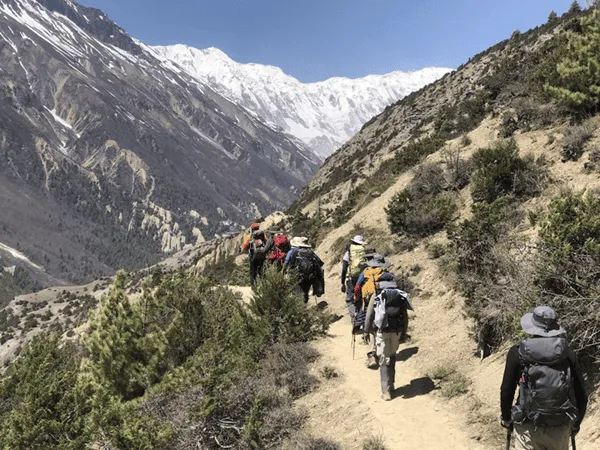
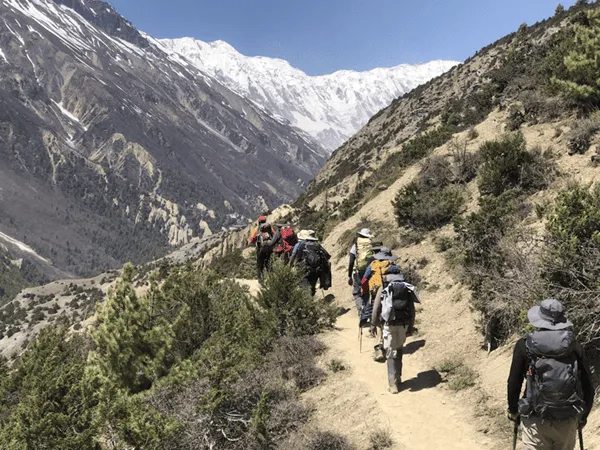
The trek to Everest Base Camp is an integral part of the Mount Everest expedition. It spans around 7 to 10 days and passes through the famous Sherpa villages like Namche Bazaar, Dingboche, Tengboche, and Lobuche.
There are a few days set aside for acclimatization along the trek at settlements like Namche Bazaar and Dingboche so as to allow the body to adjust to higher elevations. Trying to reach Everest base camp in a rush greatly raises the possibility of altitude sickness.
After finally arriving at the base camp of Everest, with an elevation of 5,364 meters (17,598 ft), climbers get ready for the next step of the journey. Most climbers rest at the Everest base camp for 5 to 10 days before attempting the acclimatization rotations.
Acclimatization Rotation Climbs
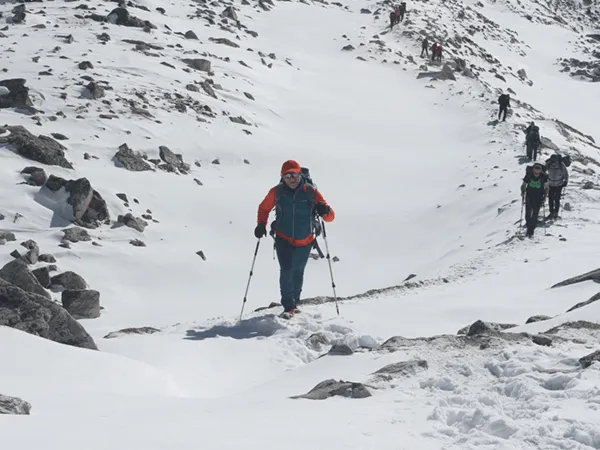
One of the most crucial stages of the Everest expedition is rotation climbs. In this stage, the climbers take a gradual ascent to higher camps and then return to Base Camp for recovery. The “climb high, sleep low” strategy enables the body to acclimate to the lower oxygen environment and helps prevent altitude sickness.
The first rotation begins with a climb to Camp I and a descent back down to Base Camp. Once recovered, climbers ascend to Camp II and then back to the base camp. Finally, the rotation will lead to Camp III and a return descent to Base Camp. Climbers can make two or three rotations over several weeks depending on the weather and the strategy of the expedition.
With each rotation, the body makes more red blood cells, making it easier to transport oxygen to muscles and the brain. The mountaineers climb progressively until they reach Camp III and then head back down to Base Camp, allowing them to develop endurance and acclimatize as required for the final summit push.
Summit Push
After acclimatization rotations, when favorable weather conditions occur, the climbers start the final ascent called the summit push. This stage is dedicated to reaching the summit and making it back to the base camp safely, unlike the previous rotations.
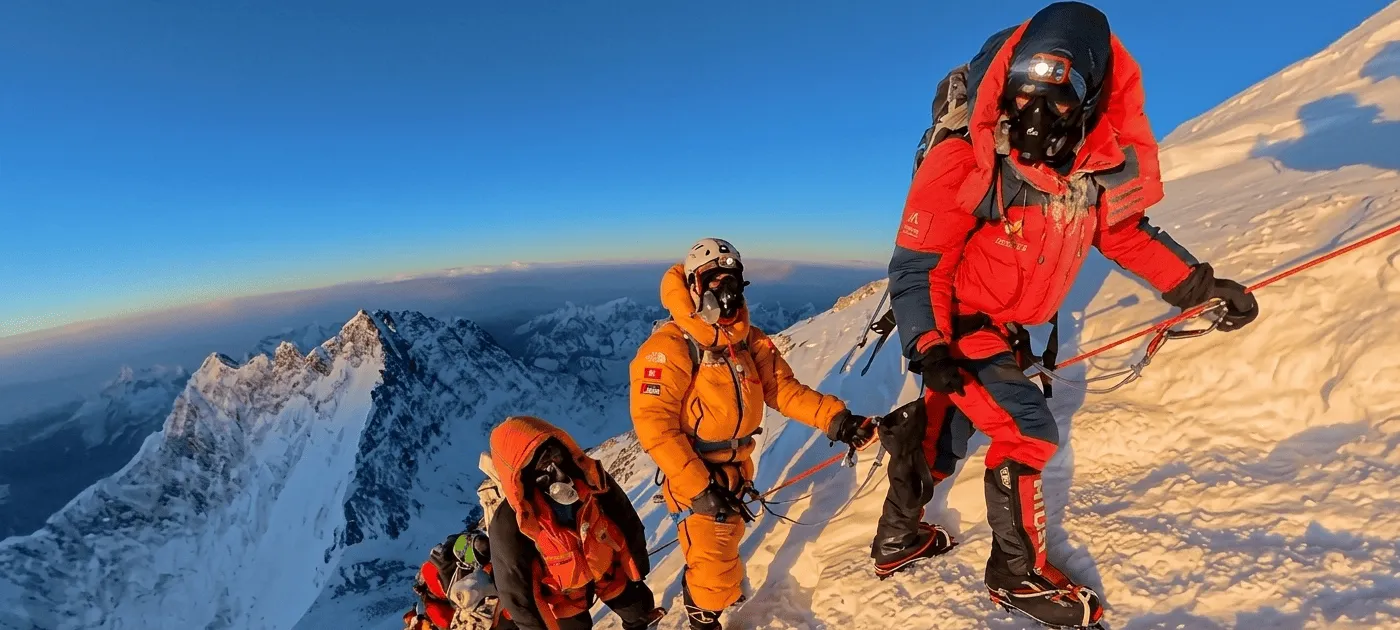
The summit push normally starts from Base Camp, then moves up to Camp I, Camp II, Camp III, and Camp IV at the South Col. Climbers leave from Camp IV at midnight, attempting to get to the summit by early morning, when the weather conditions are relatively favorable.
The climb from Camp IV to the summit will take from 10 to 14 hours on average. This is then followed by a long and physically demanding descent to Camp IV or Camp II and finally back to Base Camp. Getting to the top is a great accomplishment, but many professional mountain guides say it is just as necessary to return back down safely as climbing up to the summit, as fatigue and weather changes make the descent just as difficult.
Descent to Lukla and Return to Kathmandu
Upon safely reaching the base camp, climbers rest for one or two days before heading back to Lukla for the flight to Kathmandu. The return journey takes about 1 week, making the total duration of the entire expedition around 2 months.
What affects the duration of Mount Everest climbing?
Weather Conditions
The greatest influencing factor of the Everest climb is the weather. Summit attempts may be delayed for several days due to high winds, snowfall, and unstable weather. Climbers most often stand around patiently at base camp until safe weather conditions become available, when the ascent to higher camps and summit push is possible.
Acclimatization
Each climber reacts to the altitude in their own unique way. Some need extra rotation climbs and/or more rest days, while others follow according to the schedule. Safety should always be given priority over speed in the expedition.
Route Conditions
Climbing progress is greatly determined by the condition of the Khumbu Icefall, fixed ropes, snow accumulation, and ice stability. Bad route conditions might slow down the usual journey or even change the itinerary for the expedition.
Team Logistics
Rope fixing, oxygen supplies, Sherpa support, and campsite management will often be coordinated by large commercial expedition organizations. The efficient logistics will support the planned time schedule, whereas unexpected delays can prolong the expedition.
Why Climbers Spend Weeks Before the Summit
Many climbers are amazed at how short the time it takes to get to the top of Everest, compared to the overall time spent on the expedition.
It's really quite easy to understand why. Extreme altitude is not easily adapted to by the normal human body. The weeks spent acclimatizing greatly improve the odds of success in the summit and decrease the risk of serious altitude illnesses such as high-altitude pulmonary edema (HAPE) and high-altitude cerebral edema (HACE).
Experienced mountaineers know that for the successful Everest summit, the preparations and rotations done through several weeks are extremely important before the summit push.
Can You Climb Everest Faster?
Technically, yes. There were some experienced climbers in the past who finished their expeditions to Everest in less than 3 weeks using pre-acclimatization, hypoxic training, and extensive logistics support. Nevertheless, the expeditions are tailored for only very experienced climbers and shouldn't be taken as the conventional approach.
Most climbers find the length of six and nine weeks to be the ideal time for the Everest expedition. This time frame allows them to acclimatize properly, prepare for weather delays, and increase the chances of reaching the summit.
Planning Your Everest Expedition
Knowing how long it takes to climb Mount Everest is an important consideration to take when planning an Everest climb. The goal of a successful climb is not to reach the top as soon as possible but to prepare, acclimatize, and make safe decisions along the way.
For the expedition, leave at least two months of time from your arrival in Nepal until your departure. This gives you enough time to prepare for the extreme weather and acclimatize your body to the high altitude.
When you are patient, properly prepared, accompanied by experienced guides, and adequately acclimatized, the chances of you reaching the top of Mount Everest and returning back with an unforgettable experience are greatly enhanced.
Need Help? Call Us


We're Here to Help 24/7
Meet Your Local Experts
Creating unforgettable journeys across Nepal, Tibet, and Bhutan.
At Rising Adventure, we believe in connecting you to mountains, culture, and peace. As your trusted local travel partner, we create safe, authentic, and unforgettable trekking, climbing, and tour experiences across Nepal, Tibet, and Bhutan. With experienced local experts and personalised service, we're with you every step of your journey, from your first enquiry to your final departure, ensuring a smooth, memorable, and truly unforgettable experience of a lifetime.