

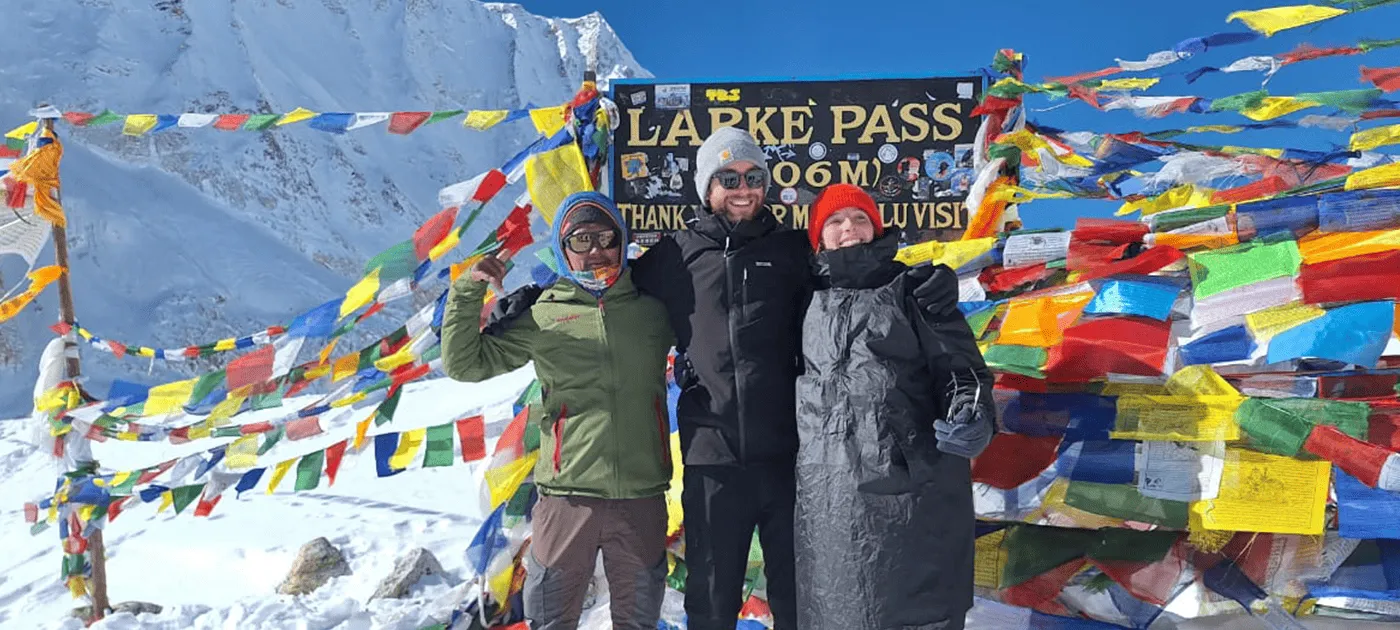
Larke Pass (Larkya La) is a stunning, dramatic high pass in the Manaslu Circuit Trek of Nepal. The pass is approximately 5106 m high above sea level and connects the upper Manaslu region with the valley of Marsyangdi and the Manang side of the Himalayas. Preparation is key to the crossing, which follows several days of walking, rising altitude, changing weather, and acclimatization.
Larke Pass: Indepth Guide to the High Altitude Pass
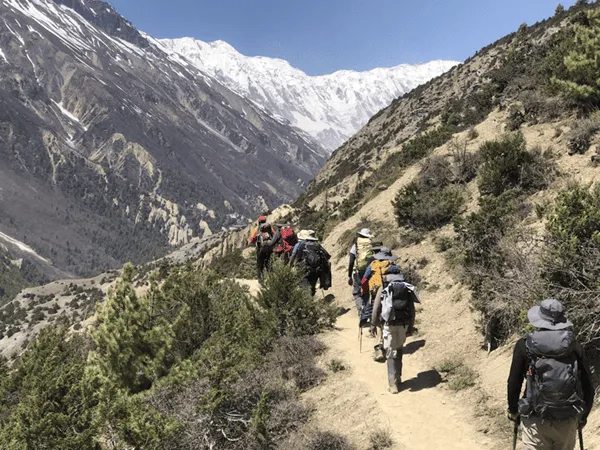
The route to Larke Pass traverses through green river valleys, traditional villages, alpine meadows, glacial regions, and high mountain landscapes. The Larke crossing on clear days provides awe-inspiring views of the surrounding mountain peaks and ridges. The high elevations, weather, scenery, and remote trail make Larke Pass one of the primary highlights of the Manaslu Circuit experience.
Where Is Larke Pass Located?
Larke Pass is located in the high Himalayan section of the Manaslu Circuit Trek, north of the major villages of Samagaon and Samdo and west of the Manaslu massif. The trail approaches the pass from the Dharamsala area before climbing through increasingly barren and rugged terrain.
The pass sits between two major drainage systems. On one side is the Budhi Gandaki Valley, which trekkers follow during the approach through the Manaslu region. On the other side lies the route toward Bimthang and the Marsyangdi Valley in Manang.
This geographical position explains why the landscape changes so noticeably during the crossing. Lower parts of the Manaslu Circuit contain forests, farmland, waterfalls, rivers, and villages. As the trail ascends, there will be fewer trees and more rocky, snowy, and exposed areas. Crossing the pass feels like moving through several Himalayan landscapes in a single trek.
The Manaslu and Manang Connection
One of the most interesting aspects of Larke Pass is that it connects the Manaslu trekking region with the Manang side of the Himalayas. The Manaslu region lies east of the Annapurna range and contains the enormous Manaslu massif, while Manang forms part of the larger Annapurna trekking landscape.
The Nepal Tourism Board describes the Manaslu route as an ancient trail following the Budhi Gandaki River before reaching Larke Pass and crossing into Manang District. This makes the pass more than just the highest point of a trek. It is also a geographical gateway between two major Himalayan valleys.
Why Is Larke Pass Important on the Manaslu Circuit?
For most trekkers, Larke Pass is the central physical challenge of the Manaslu Circuit. The trek gradually builds toward this crossing, so the pass represents the point where preparation, acclimatization, endurance, weather awareness, and pacing all come together.
The challenge is not necessarily technical climbing. Most trekkers do not need mountaineering skills simply to cross the pass under normal conditions. Instead, the difficulty comes from the combination of high altitude, a long walking day, cold temperatures, potentially snowy terrain, and the need to maintain steady energy for several hours.
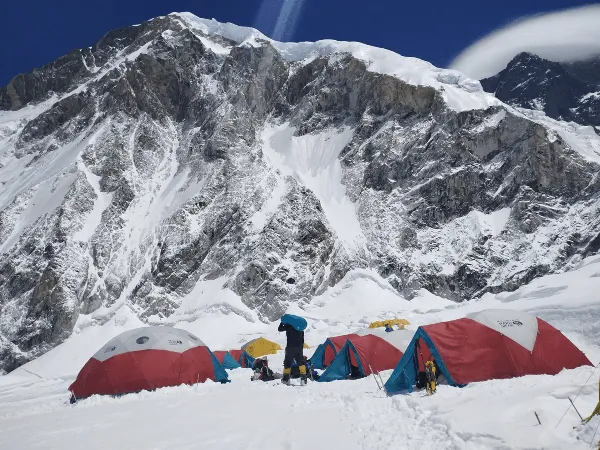
The crossing also gives the Manaslu Circuit its distinctive character. The route does not simply take trekkers to a viewpoint and back. It moves from one major Himalayan valley to another, with Larke Pass acting as the natural bridge between them. The scenery around the pass can be especially dramatic, with broad snow-covered slopes, glacial terrain, distant peaks, and enormous mountain horizons.
How to Reach the Larkya La Pass
Larkya La Pass does not have a direct road or flight connection. It is reached as part of the Manaslu Circuit, which begins in the lower valleys of the Gorkha region. A common modern itinerary begins with an overland journey from Kathmandu toward Machha Khola, although the exact starting point can vary according to road conditions and the trekking agency's planned route. The drive can be long and rough in sections, particularly where mountain roads follow steep valleys.
Once trekking begins, the route generally follows the Budhi Gandaki Valley through settlements such as Jagat, Deng, Namrung, Lho, and Samagaon. The trail becomes progressively more mountainous as you move north.
Rather than rushing through the approach, a sensible itinerary uses the lower sections to build walking endurance while gradually gaining altitude. This is primarily important when coming closer to Samagaon. Therefore, acclimatization days are often added on before heading up to the pass.
Manaslu Circuit Trek Itinerary to Larkya La Pass
The typical Manaslu circuit trek itinerary ascending to the Larkya La Pass is as follows:
- Day 1: Arrival in Kathmandu
- Day 2: Exploration Day in Kathmandu
- Day 3: Scenic Drive from Kathmandu to Machha Khola
- Day 4: Trek to Jagat
- Day 5: Trek to Deng
- Day 6: Trek to Namrung
- Day 7: Trek to Shyala Village
- Day 8: Hike from Shyala to Pungyen Gompa and Trek towards Samagaon
- Day 9: Trek Samdo Village
- Day 10: Acclimatization Day at Samdo Village and Visit to the Nepal-Tibet Border
- Day 11: Trek to Dharmasala
- Day 12: Trek to Bimthang via Larke La Pass
- Day 13: Trek to Dharapani
- Day 14: Drive back to Kathmandu from Dharapani via Besisahar
What Is the Larke Pass Crossing Like?
Many trekking groups begin to cross the Larke Pass early in the morning. The initial darkness, cold weather, and the thought of a long day walk can make the journey feel extreme, but the early start is helpful in providing more daylight hours for the crossing.
The path slowly ascends through a more and more desolate area. There may be sections of snow, ice, loose rock, or frozen ground depending on the season. The exact appearance of the trail cannot be guaranteed because mountain conditions change from year to year.
Near the top, the pace naturally becomes slower. The important strategy is not to race toward the pass but to maintain a consistent rhythm. Short breaks, controlled breathing, hydration, and steady pacing are generally more useful than trying to make up time through bursts of speed.
Once you reach the top, the scenery opens dramatically. The pass provides a broad mountain panorama, and the feeling of standing above 5,000 meters after days of trekking is one of the defining moments of the Manaslu Circuit.
Larkya La Pass Difficulty
Larkya La Pass difficulty comes primarily from altitude, duration, weather, terrain, and accumulated fatigue. It is a demanding high-altitude trekking pass, but it is not normally considered a technical mountaineering climb under standard conditions.
The difficulty can change significantly according to weather. A clear autumn day with a firm trail can feel very different from a crossing after heavy snowfall. Strong winds, poor visibility, icy surfaces, or unexpected snow can make the same route substantially harder.
Physical preparation therefore matters, but preparation alone does not remove the risks associated with altitude. A trekker can be physically fit and still experience altitude-related problems. The best strategy is gradual acclimatization, steady pacing, awareness of weather, and flexibility to the itinerary when needed.
Altitude and Acclimatization
The difficulty of Larkya La Pass is probably most affected by altitude. The available oxygen in the air is considerably less at an altitude above 5000 m compared to sea level, and the body requires time to adjust at higher elevations.
This is why a well-planned Manaslu Circuit includes acclimatization rather than treating the route as a race. Samagaon is commonly used for an acclimatization day before trekkers move toward the highest section of the route.
Warning signs such as persistent headache, unusual weakness, dizziness, nausea, confusion, or worsening shortness of breath should not be ignored. If symptoms suggest altitude illness, descending to a lower elevation is more important than reaching the pass.
Weather and Trail Conditions
Weather can change quickly around Larkya La Pass. Even during the trekking seasons, cold temperatures and snowfall are possible at high elevations. Wind can make the apparent temperature much lower, while cloud or snowfall can reduce visibility.
Snow conditions also affect the trail. A route that is relatively straightforward when dry can become slower and more demanding when covered by fresh snow or ice. This is one reason experienced local guides are valuable in the high sections of the Manaslu Circuit.
Trekkers should avoid assuming that a favorable weather forecast guarantees easy conditions. Mountain weather forecasts provide useful guidance, but actual conditions on the trail can differ.
Best Time to Cross Larke Pass
The main trekking seasons of the Manaslu region are generally the most ideal seasons to cross the Larke Pass. March to May and September to November are the best seasons to visit the Manaslu Conservation Area, according to the Nepal Tourism Board.
October and November are particularly attractive because post-monsoon conditions often bring clearer mountain views and relatively stable trekking weather. The trail can be busy compared with other months, but the visibility and generally favorable conditions make autumn a popular choice.
March to May is another good window. Spring brings improving weather and warmer conditions at lower elevations, while the high mountains can still retain significant snow. April and May can be particularly appealing for trekkers who want a combination of mountain scenery and spring landscapes.
Winter crossings require much greater caution. Crossing high passes can become difficult or even impassable in heavy snow and extremely cold weather. The monsoon months are also less attractive because lower sections of the route can be affected by rain, muddy trails, landslides, and reduced mountain visibility.
Permits Required for the Manaslu Circuit Trek
Permits are an important part of planning the Manaslu Circuit. The route passes through the Manaslu restricted area, meaning foreign trekkers need the relevant special trekking permit arranged through the authorized process.
Below are the essential Manaslu Circuit trek permits along with their costs:
| Permit | Cost |
| Manaslu Restricted Area Permit (RAP) September to November | 100 USD for the first 7 days, an additional 15 USD per day |
| Manaslu Restricted Area Permit (RAP) December to August | 75 USD for the first 7 days, an additional 10 USD per day |
| Manaslu Conservation Area Permit (MCAP) | 30 USD per person |
| Annapurna Conservation Area Permit (ACAP) | 30 USD per person |
| Chumnubri Rural Municipality Fee | 1000 NPR |
Accommodation and Facilities Along the Route
Lodges and teahouses offer accommodation throughout the Manaslu Circuit, especially in the designated trekking routes. Generally, basic rooms, food, hot beverages, and services such as WiFi and hot showers are available at lower elevations. Facilities become simpler as the route climbs toward Samdo and Dharamsala.
Dharamsala deserves particular attention because it is the last major overnight stop before the Larke Pass crossing. The facilities for trekkers should not be expected to be as comfortable as those in Kathmandu or other popular trekking destinations. The high-altitude section is about practicality rather than luxury.
What to Pack for Larkya La Pass
Packing for Larkya La Pass requires preparation for both relatively mild lower-elevation conditions and freezing high-altitude weather. The route passes through several climatic zones, so carrying only heavy winter equipment or only lightweight trekking clothing would both be poor strategies.
Essential equipment generally includes warm layers, a waterproof outer shell, gloves, a warm hat, trekking poles, sturdy trekking boots, sunglasses, sunscreen, a headlamp, water bottles, personal medication, and a properly fitted backpack.
For the pass itself, warm insulation becomes especially important because the early morning start can be extremely cold. Microspikes or other traction equipment may also be useful depending on current snow and ice conditions. The exact gear requirement should be determined after checking current trail conditions with your guide or trekking agency.
Safety Tips for Crossing Larke Pass
Safety on Larke Pass begins several days before the actual crossing. Acclimatization should be treated as part of the trek rather than as lost time. The body needs sufficient opportunity to adjust before reaching the highest sections.
Weather should also influence decisions. If the Larkya-La crossing becomes unsafe due to heavy snow, strong winds, or poor visibility, it is better to postpone crossing.
Here are several practical tips that can make a huge difference in successfully crossing the pass:
- Maintain a slow and steady pace
- Take fluids on a regular basis even if you are not thirsty
- Wear warm layers of clothing
- Get an early start on the crossing day
- Remain close to the trekking group throughout the crossing
- Adhere to the advice of the guide about trail conditions and weather
- Take symptoms of altitude illness seriously
- Carry a headlamp because the crossing often begins early
- Keep emergency essentials accessible rather than buried at the bottom of the backpack
The main goal is not about reaching the highest point. It is about making it to the pass safely and descending without any injuries or health issues.
Larke Pass Views and Landscape
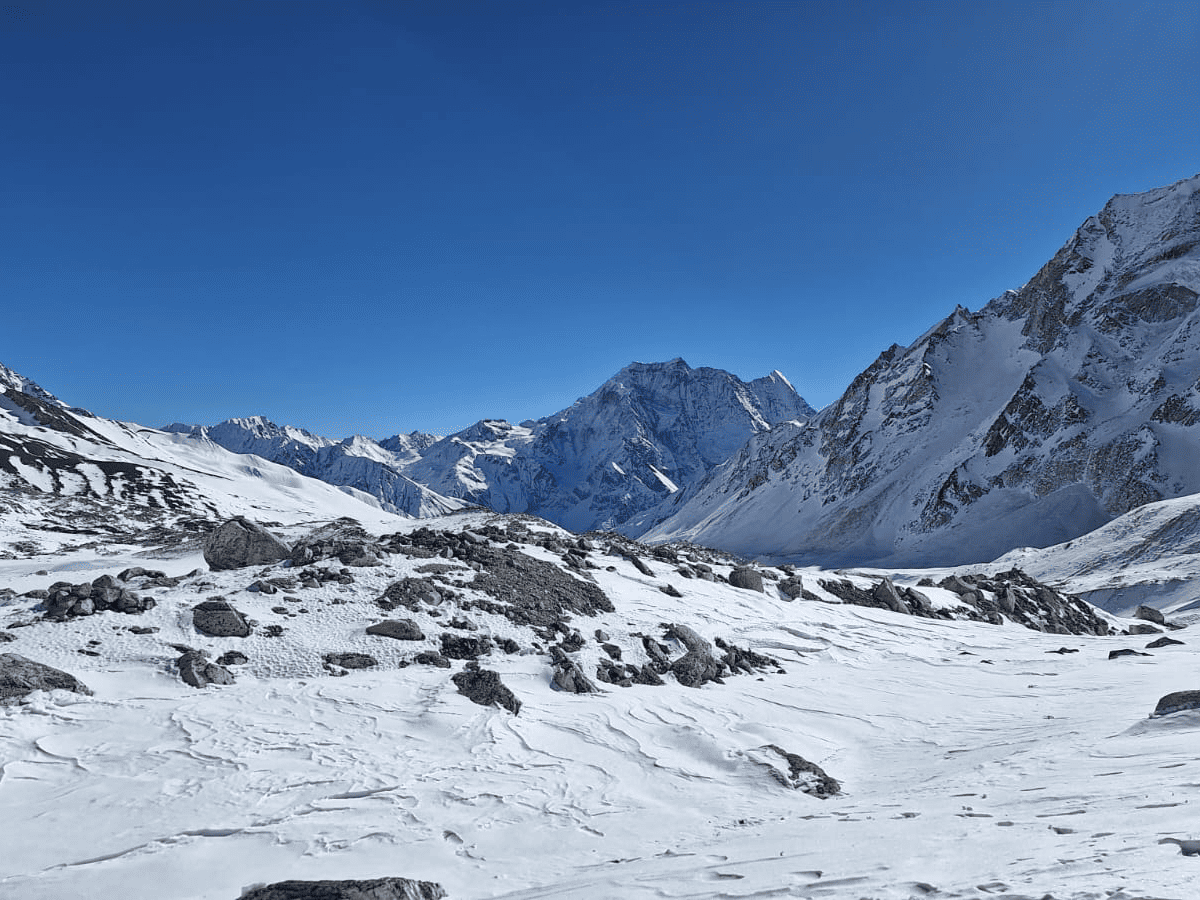
The landscape around Larke Pass becomes more rugged as you ascend higher to the alpine region. The green valleys and forests of the lower part of Manaslu turn to barren slopes, rocky terrain, glacial valleys, and snow-covered tracks.
The route to Larke Pass provides views of Manaslu, Himalchuli, Ngadi Chuli, and many other peaks of the Manaslu range. Trekkers can also enjoy the views of glaciers, high mountain ridges, and wide alpine valleys. As you climb higher, the area becomes more open. Thus, providing an incredible opportunity to relish the grandeur of the Himalayan landscape.
The scenery at Larke Pass is mostly dominated by snow, ice, rock, and giant mountain peaks. Clear days offer great views across the surrounding landscape of the Himalayas, but clouds, wind, and snow can quickly lower visibility. The Larke Pass crossing is a memorable part on the Manaslu Circuit due to the changing terrain and mesmerizing high altitude mountain vistas.
Is Larke Pass Beginner Friendly?
Larke Pass can be achievable for trekkers without previous high-altitude mountaineering experience, but it should not be approached casually. A first-time trekker who has prepared properly, follows a sensible itinerary, acclimatizes correctly, and has experienced support can undertake the crossing.
The key distinction is between trekking experience and technical climbing experience. Larke Pass does not normally require advanced mountaineering techniques under standard trail conditions, but it does require endurance and the ability to traverse safely at very high altitude.
Beginners should therefore focus on preparation rather than trying to prove that they can complete the route quickly. Regular cardiac exercise, long uphill walks, strength training, and practice using trekking poles can be very useful. More importantly, trekkers should become clear with the idea that sometimes it is appropriate to turn around or change plans in the mountains.
Final Thoughts on Larke Pass
Larke Pass (Larkya La) is an incredible high-altitude pass that offers one of the dramatic, varied landscapes of the Manaslu region. The pass at approximately 5,106 m provides a challenging but also a rewarding experience due to the changing terrain, snow-covered slopes, glaciers, and vistas of the Himalayas throughout. Appropriate acclimatization, preparation, and an understanding of changing weather and trail conditions are essential to reach the Larke Pass. Additionally, the pass crossing can be a safe and memorable experience with sufficient time, proper equipment, and local guided support.
Need Help? Call Us


We're Here to Help 24/7
Meet Your Local Experts
Creating unforgettable journeys across Nepal, Tibet, and Bhutan.
At Rising Adventure, we believe in connecting you to mountains, culture, and peace. As your trusted local travel partner, we create safe, authentic, and unforgettable trekking, climbing, and tour experiences across Nepal, Tibet, and Bhutan. With experienced local experts and personalised service, we're with you every step of your journey, from your first enquiry to your final departure, ensuring a smooth, memorable, and truly unforgettable experience of a lifetime.