Bhutan is a fascinating travel destination with its dramatic landscapes, centuries-old monasteries, impressive dzongs, and deep-rooted traditions. First-time visitors might find it difficult to plan which destination to visit because Bhutan has so much to offer, and visiting every landmark is not practically possible in a limited amount of time.
The guide highlights 10 must visit places in Bhutan that offer superb entry points into the country's natural beauty, history, spirituality, and cultural heritage. If you are interested in exploring ancient landmarks, enjoying peaceful mountain valleys, or looking to delve into the Bhutanese culture, these are the places you have to visit while you are in Bhutan.
10 Must Visit Places in Bhutan
Simply Bhutan
Simply Bhutan, a living museum, is a notable landmark situated at Genyen Lam, Thimphu, Bhutan. It promotes the traditional Bhutanese architecture and was created with the use of old parts of the ancient demolished houses. You can explore various sections in this museum, like the Pachhab Studio, the Tashi Delek Museum, and the wishing well. You will witness various equipment, including the antique cooking wares depicting the lives of ancient Bhutanese people.
The museum opens from 9am to 5pm (10am-5pm during winter), and the entry fee will cost around 300 Nu. You can stroll around the museum for 1-2 hours, where you can take pictures wearing traditional Bhutanese costumes. You will get familiar with the past of Bhutan and enjoy trying out archery, the national sport of Bhutan.
National Memorial Chorten
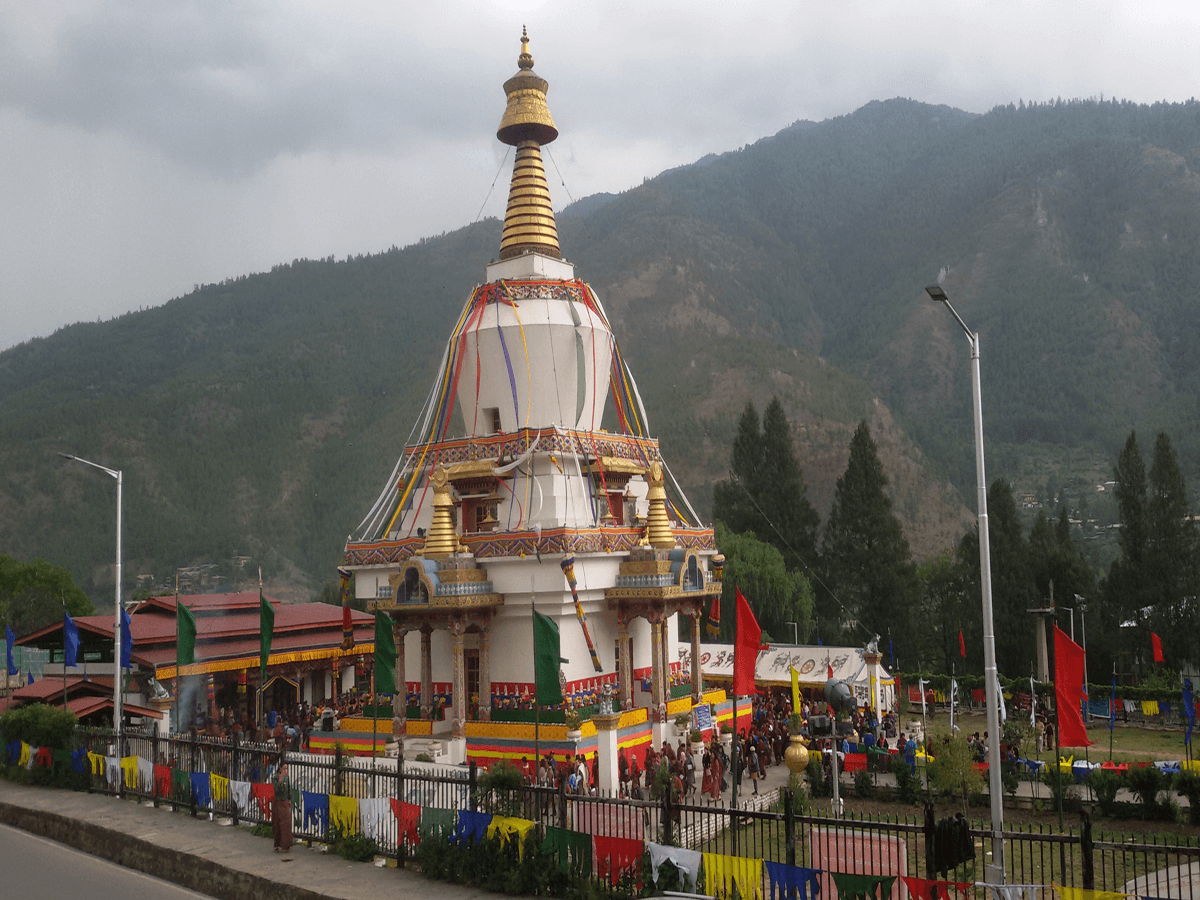
Located in the city of Thimpu, the National Memorial Chorten is a significant representation of the culture, belief, and spirituality of the Bhutanese people. It was built in 1974 in remembrance of His Majesty Jigme Dorji Wangchuck, the third king of Bhutan.
The entrance of the memorial chorten passes through an ornate gate carved with Avalokiteshvara (compassion), Manjushri (wisdom), and Vajrapani (power). Its inside consists of several floors dedicated to various Buddha teachings. Your visit to the memorial chorten will enlighten you with the spiritual lives of the Bhutanese people.
National Memorial Chorten
Buddha Dordenma
Buddha Dordenma is among the largest Buddha statues in the world, which overlooks Thimphu Valley on the hilltop of Kuenselphodrang. It is 54 meters high, depicting peace and harmony, and is created to mirror serenity and elegance.
The statue has approximately 125 thousand smaller Buddha statues that are crafted from bronze and decorated with gold. Thus, making it an exceptional architectural marvel. The viewpoint around the statue provides panoramic views of the Thimphu valley, where people can relax, take photos, and connect with Bhutan’s profound Buddhist spirituality.
Chele La Pass
Chele La Pass is among the best places for travelers who wish to enjoy Bhutan's high mountain topography without going on a long trek. The road heads into a dramatic alpine setting in between the Paro and Haa Valleys, where the views are vastly different from those seen in the lower valleys. On clear days, the view will feature distant mountains and peaks in the background.
Chele La Pass evokes a sense of high altitude and wilderness that makes it one of the must visit places in Bhutan. The route is also part of the experience as you slowly switch from forest and valley settings to the high-altitude mountain region. Views are frequently enhanced by the addition of colorful prayer flags.
Dochu La Pass
With an elevation of 10,200 ft (3,100 m) from sea level, Dochula Pass is one of the highest mountain passes of Bhutan. You will reach the pass while driving from Thimpu to Punakha. On a clear day, even mesmerizing views of the mountain peaks, including the highest mountain of Bhutan, Mount Gangkar Puensem (7,158 meters, 23,484 ft), are visible.
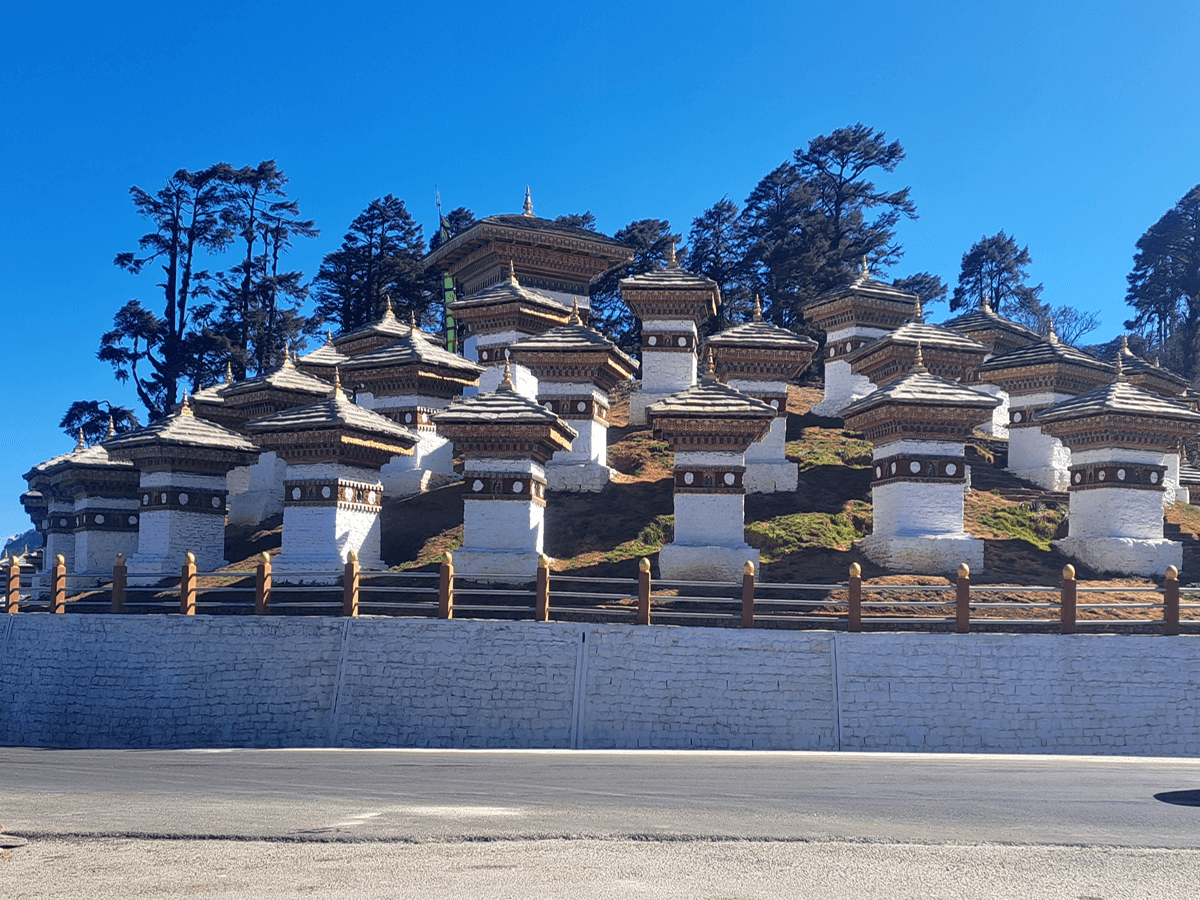
Another place that you can also see is the 108 Druk Wangyal Chortens (memorial stupas), which were constructed in honor of the 108 Bhutanese soldiers. Cypress trees and prayer flags adorn the paths along the pass, which give serene and pleasant vibes.
108-chortens-in-dochula-pass
Punakha Dzong
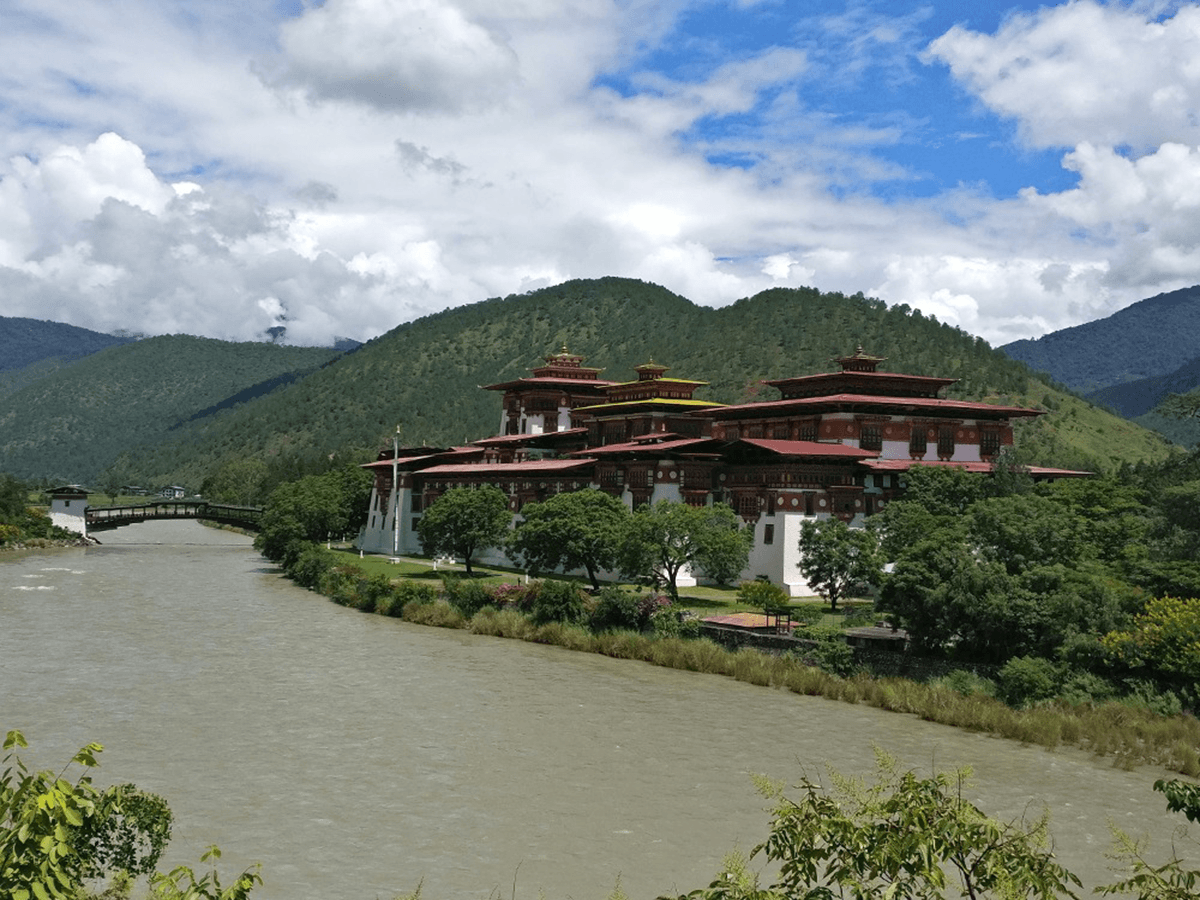
Punakha is undoubtedly one of the most beautiful dzongs situated in Punakha, Bhutan. It stands at 180 m long and 72 m wide, with the central tower having six floors. The dzong is situated at the confluence of the Pho Chhu (male) and Mo Chhu (female) rivers and can be reached by crossing the Bazam bridge. Every king of Bhutan has been crowned at this place. Built in 1637, it showcases the world-class historical artistry of Bhutan. It is one of the go-to destinations of tourists in Bhutan.
Punakha Dzong
National Museum of Bhutan
The National Museum of Bhutan is a great place for visitors to gain insight into the nation beyond its picturesque landscape. The museum is housed in the historic Ta Dzong, a watchtower above Rinpung Dzong in Paro, which also has significant history behind it. It was built in 1649 and subsequently became the national museum of Bhutan, housing a remarkable collection of cultural and historical artifacts.
The museum has been holding over 3,000 pieces, such as sacred relics, royal heirlooms, historical stamps, thangka paintings, and traditional costumes. This is a must visit place in Bhutan to enhance the knowledge of Bhutanese heritage during the initial visit.
Chimi Lhakhang
Chimi Lakhang is one of the most visited landmarks, which is dedicated to Lama Drukpa Kunley, sometimes referred to as the Divine Madman. The houses and shops are decorated with protective phallic symbols because of his influence. The phallic symbols are associated with fertility in the culture of Bhutan. Inside Chimi Lakhang, you will witness several statues, including the central statue of the lama and his dog, Sachi.
It is very renowned among both tourists and Bhutanese pilgrims. Childless women visit this place to get blessings from the saint, while future mothers stop by here to select the name of their future babies. This place will offer foreign tourists the opportunity to witness the sacred rituals performed here and to know the history of the Divine Madman.
Tiger’s Nest Monastery
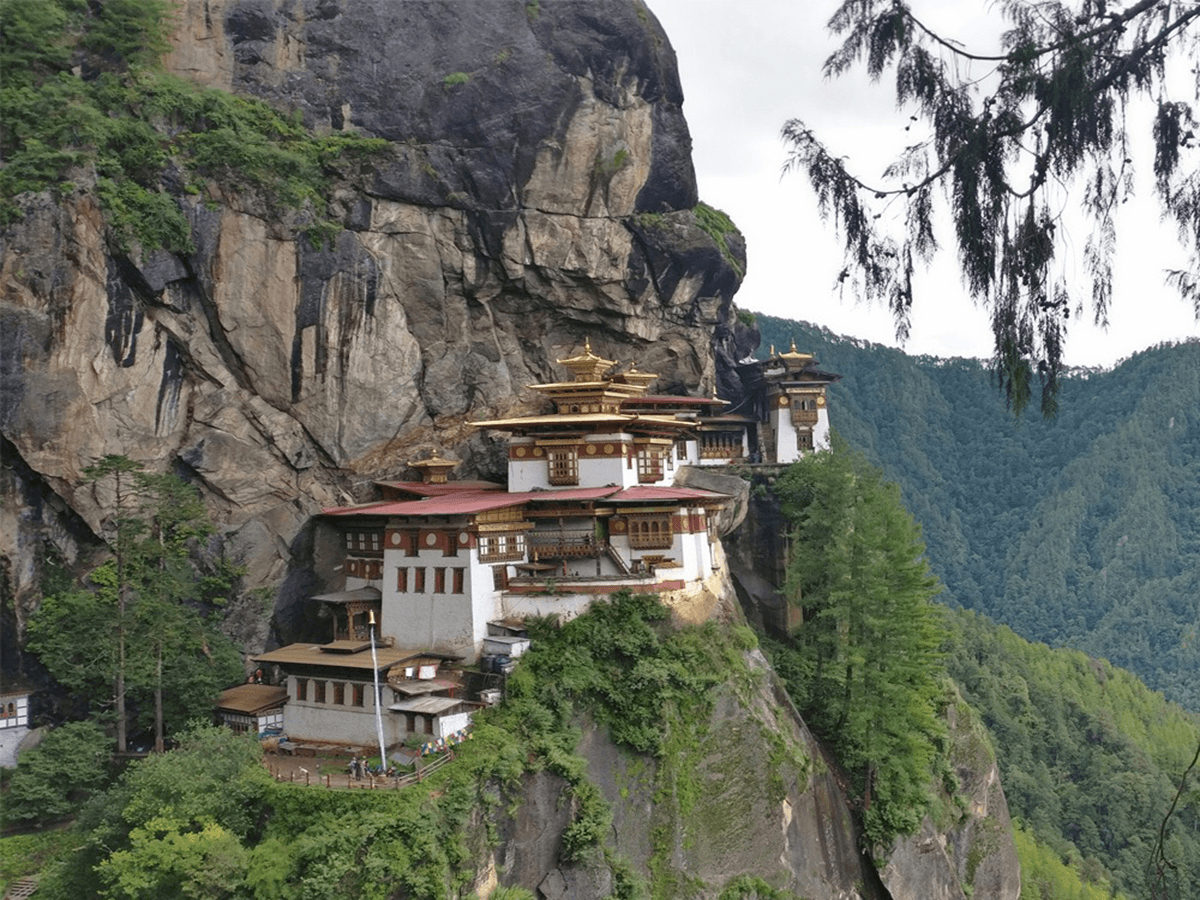
Taktsang Monastery (also known as the Tiger’s Nest Monastery) is a must-visit landmark during your first travel in Bhutan. The monastery rests on the cliff in Paro Valley with an elevation of 3,120 m (10,232 ft) from sea level.
According to the legend of Bhutan, Guru Padmasambhava (also known as Guru Rinpoche) flew to the cliff on the back of a mythical tigress in 747 AD. He meditated in the cave for several years (3 years, 3 months, 3 weeks, and 3 days). That is how the name “Tiger’s Den” originated. Later in 1692, the 4th Druk Desi, Tenzin Rabgey, built the marvelous monastery around the cave.
It will take about 4-5 hours to complete the hike to Taktsang Monastery. You also have the option to rent a horse, which will take you up to the midway cafeteria. Along the way, you will find vibrant prayer flags and several viewpoints. You can explore inside Tiger’s Den Monastery upon your arrival. Please be respectful towards the Bhutanese culture and obey all the rules during your visit inside the temple.
Tiger's Nest Monastery
Paro Rinpung Dzong
Paro Dzong (Rinpung Dzong) is a great symbol of the rich history, culture, and architecture of Bhutan. Rinpung Dzong, the fortress and monastery of the Paro valley, is also called Fortress on a Heap of Jewels. The fortress exhibits wood carvings, tall walls, and antique paintings. It was built in 1646, which was initiated by the unifier of Bhutan, Zhabdrung Ngawang Namgyal.
The Dzong also served as a military defense and was used on multiple occasions to protect the Paro valley from Tibetan invasions. It has also accommodated the government offices of the district, which reflects its significance to the sovereignty of Bhutan.
Here, Bhutan’s well-renowned Paro Tsechu festival is also celebrated, honoring Guru Rinpoche. The festival is known for its vibrant masked dances by the monks, which highlight Buddhist legends and teachings. You can also witness the unfurling of Thongdrel (a huge thangka) at the celebration. You can get the opportunity to attend the 5-day festival if you visit around March or April.
Final Thoughts
Traveling Bhutan truly becomes a memorable and meaningful journey as a series of interconnected locations rather than simply visiting the remarkable places. From the historic streets and valleys of Paro to the dramatic trail going towards Cliffside Tiger's Nest monastery, each destination contributes a new perspective to the journey. The must visit places included in this guide give a good introduction to Bhutan, as they represent some of the best tourist attractions in Bhutan without limiting the experiences to a select category.
For first-time visitors, the visit to Paro, the National Museum of Bhutan, Punakha Dzong, Dochula Pass, and other destinations on this list can prove to be a varied and enchanting experience. Give yourself enough time to travel between destinations, immerse yourself in the local customs and traditions, and enjoy the little things during the journey. In Bhutan, the road, the scenery, and the tranquil atmosphere are equally amazing as the famous landmarks.
Creating unforgettable journeys across Nepal, Tibet, and Bhutan.
At Rising Adventure, we believe in connecting you to mountains, culture, and peace. As your trusted local travel partner, we create safe, authentic, and unforgettable trekking, climbing, and tour experiences across Nepal, Tibet, and Bhutan. With experienced local experts and personalised service, we're with you every step of your journey, from your first enquiry to your final departure, ensuring a smooth, memorable, and truly unforgettable experience of a lifetime.